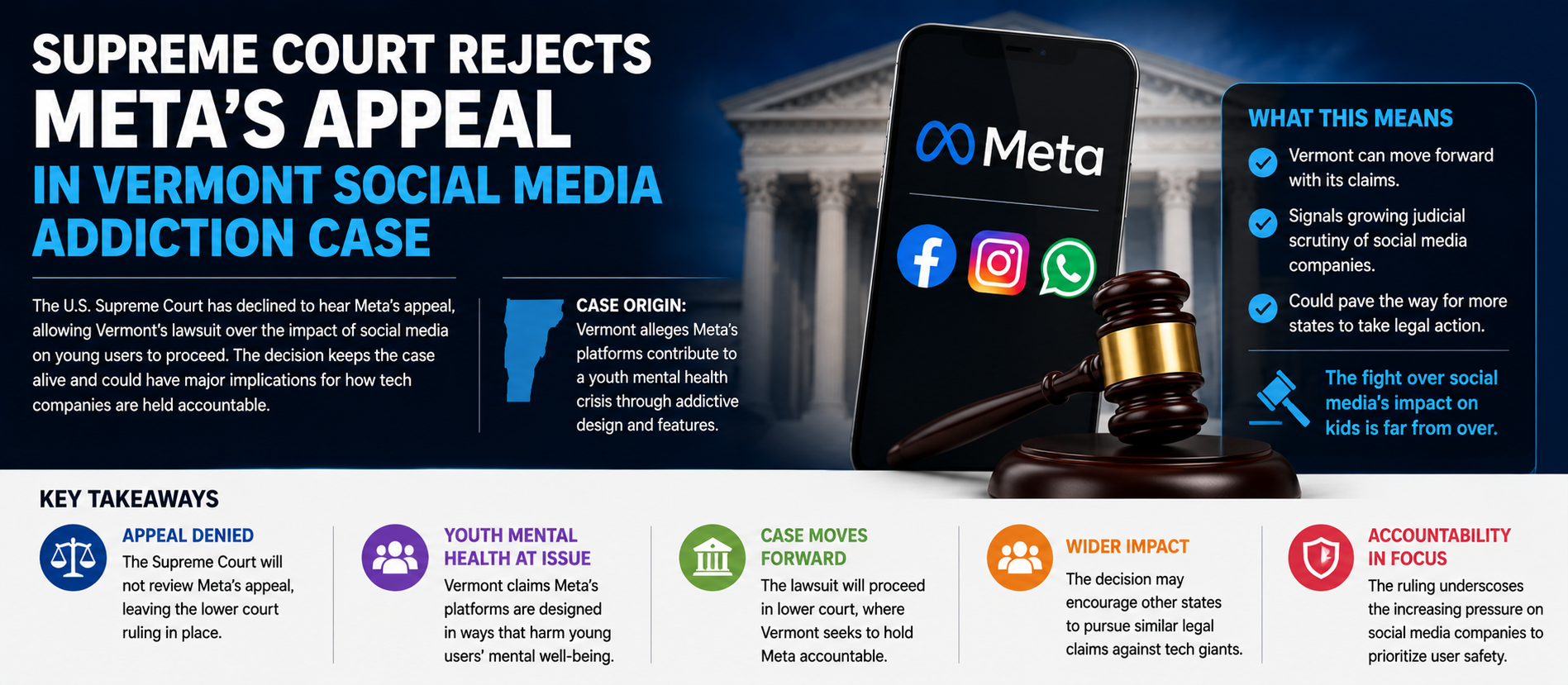
The growing concerns around social media addiction, especially among younger users, are becoming one of the biggest discussions in the digital world.
A recent legal development involving Meta and a social media addiction-related case has once again placed major technology platforms under public and legal scrutiny.
As governments, parents, educators, and technology experts continue debating the impact of social platforms on mental health and digital behavior, the future of online engagement may undergo significant changes.
At Designfo, we believe this issue highlights the growing importance of:
- Ethical digital design
- Responsible social media strategies
- AI-driven moderation
- User well-being
- Safer online ecosystems
Why Social Media Addiction Is a Global Concern
Social media platforms are designed to maximize:
- User engagement
- Screen time
- Content interaction
- Algorithmic retention
Features such as:
- Endless scrolling
- Notifications
- Personalized feeds
- Short-form videos
- AI recommendations
can significantly increase platform usage.
Many experts now argue that excessive digital engagement may affect:
- Mental health
- Sleep quality
- Attention spans
- Emotional well-being
- Youth development
This has led to increasing legal and regulatory discussions worldwide.
The Role of Ai-powered Algorithms
Modern social platforms rely heavily on Artificial Intelligence to:
- Personalize content
- Predict user interests
- Increase engagement
- Optimize recommendations
AI systems analyze:
- User behavior
- Viewing habits
- Interaction patterns
- Content preferences
This creates highly addictive and personalized digital experiences.
Pro tip: At Designfo, we believe AI recommendation systems are becoming one of the most powerful forces shaping online behavior.
Why Legal Pressure on Tech Companies Is Growing
Technology companies increasingly face questions about:
- User safety
- Mental health impact
- Youth protection
- Algorithm transparency
- Ethical platform design
Governments and legal systems around the world are examining whether social platforms should bear greater responsibility for:
- Addictive design systems
- Harmful content exposure
- Data-driven engagement tactics
This may lead to:
- Stronger regulations
- Platform accountability
- Transparency requirements
- New digital safety policies
How Social Media Changed Digital Culture
Social platforms transformed:
- Communication
- Entertainment
- News consumption
- Marketing
- Online communities
Today, billions of users rely on:
- TikTok
- Instagram
- Facebook
- YouTube
- X (Twitter)
for:
- Information
- Social interaction
- Entertainment
- Product discovery
However, this rapid growth has also created concerns around:
- Overconsumption
- Digital dependency
- Algorithmic influence
- Online behavior manipulation
The Impact on Younger Audiences
Children and teenagers are especially vulnerable to:
- Excessive screen exposure
- Social comparison
- Viral pressure
- Online validation systems
Features like:
- Likes
- Shares
- Viral trends
- Engagement metrics
can influence emotional and psychological behavior.
Many educators and psychologists now advocate for:
- Healthier digital habits
- Screen-time awareness
- Better online education
- Responsible technology use
The Importance of Responsible Digital Design
Modern platforms may increasingly need to prioritize:
- User well-being
- Ethical engagement systems
- Healthier recommendation models
- Transparent algorithms
- Digital safety tools
Responsible digital design could include:
- Better parental controls
- Time management systems
- Content moderation improvements
- AI safety monitoring
At Designfo, we believe future digital platforms must balance:
- Growth
with:
- responsibility
How This Affects Digital Marketing
📋 Quick Summary
- Engagement strategies
- Social media algorithms
- Content marketing systems
- Community building
- Ethical marketing
- Healthier digital experiences
- The conversation around social media addiction could also reshape:
- Engagement strategies
- Social media algorithms
- Content marketing systems
- Brands may increasingly focus on:
- Community building
- Ethical marketing
- Healthier digital experiences
Consumers are becoming more aware of how algorithms influence online behavior.
The Future of Social Media Regulation
Future regulations may focus on:
- AI transparency
- Child safety
- Platform accountability
- Algorithm disclosure
- Digital wellness protections
Technology companies may need to adapt by:
- Redesigning engagement systems
- Improving moderation
- Increasing transparency
- Enhancing user protections
How Designfo Approaches Digital Engagement
At Designfo, we believe digital marketing should prioritize:
- Authentic communication
- User trust
- Ethical engagement
- Responsible content strategies
- Human-centered branding
Our approach combines:
- AI-powered marketing
- SEO optimization
- Social media visibility
- Audience engagement
- Trust-focused digital growth
Final Thoughts
The growing debate around social media addiction reflects a larger shift happening in the digital world.
As AI-powered platforms become more influential, society is increasingly asking important questions about:
- Technology ethics
- Mental health
- User protection
- Digital responsibility
At Designfo, we believe the future of digital platforms must combine:
- Innovation
- AI intelligence
- Ethical design
- Human well-being
- Responsible engagement systems
Because the future of technology should not only focus on attention.
It should also focus on trust, balance, and healthier digital experiences.