- What Are Triggered Emails?
Triggered emails are automated messages sent in response to specific customer actions or predefined conditions. - Why Real-Time Automation Matters in B2B Marketing
Modern B2B buyers expect immediate responses. - Build Automated Welcome Sequences
The first interaction after a prospect submits a contact form or downloads a resource is critical. - Automate Demo and Consultation Reminders
B2B organizations frequently schedule product demonstrations, discovery meetings, consultations, and webinars.
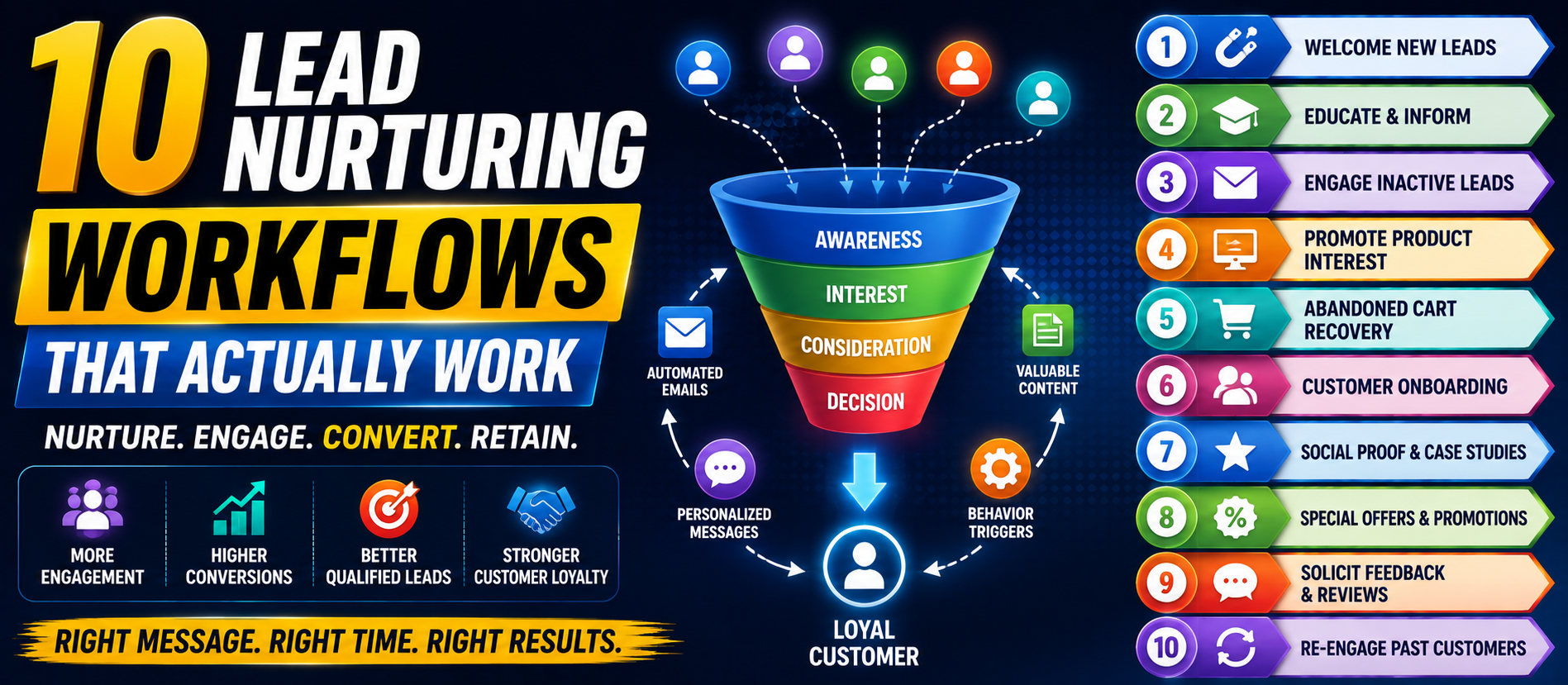
Business-to-business (B2B) buying decisions rarely happen after a single interaction. Unlike consumer purchases, B2B sales often involve multiple decision-makers, longer research cycles, product evaluations, demonstrations, internal approvals, and ongoing communication before a contract is finalized. As a result, timely follow-up is one of the most important factors influencing conversion rates.
Unfortunately, manually tracking every prospect, sending personalized follow-up emails, scheduling reminders, and monitoring customer activity becomes increasingly difficult as businesses grow. This is where Triggered Emails and Real-Time Marketing Automation deliver exceptional value. Instead of relying on manual processes, businesses can automatically respond to customer actions with relevant emails, reminders, notifications, and personalized content at exactly the right moment.
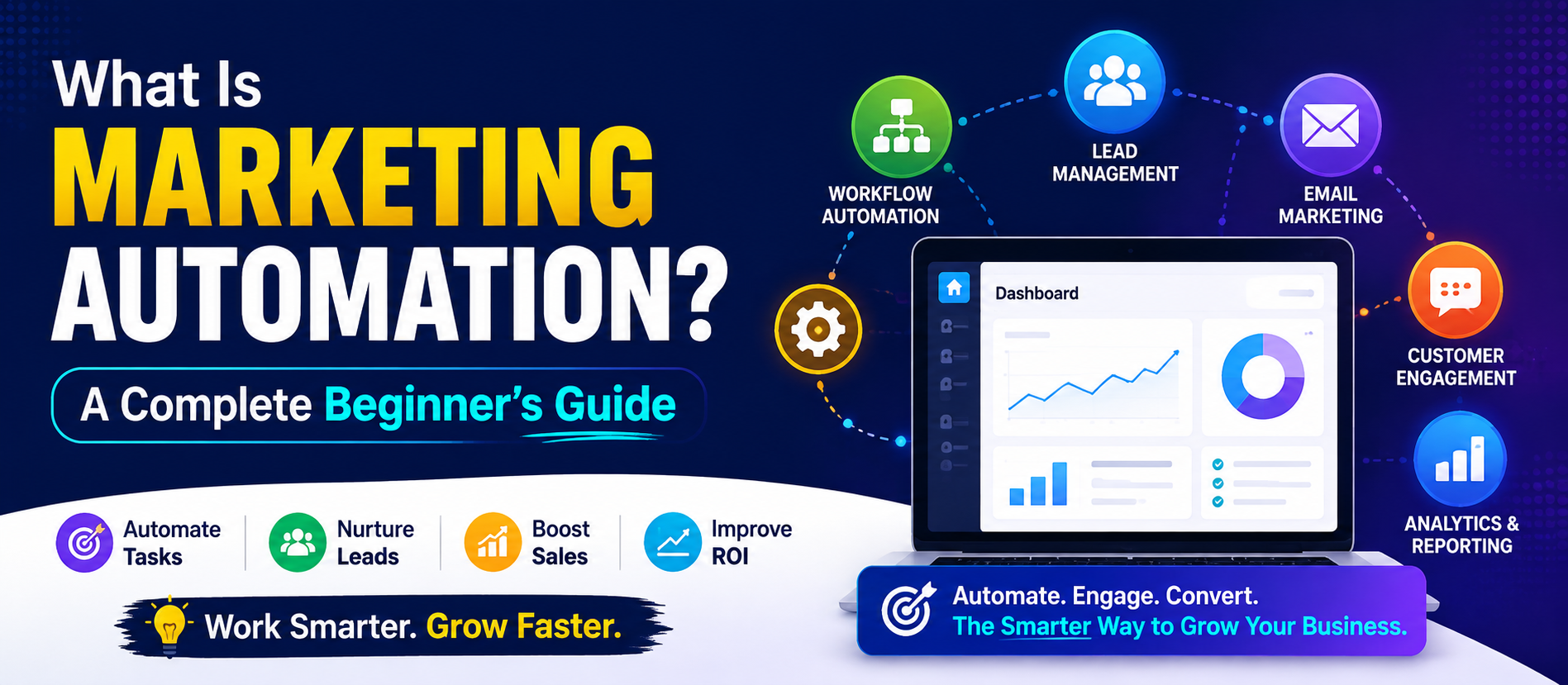
Combined with Artificial Intelligence (AI), Customer Relationship Management (CRM) systems, and behavioral analytics, triggered email automation helps organizations increase engagement, accelerate sales cycles, improve customer experiences, and generate more qualified conversions.
This guide explores the most effective real-time B2B marketing automation strategies, explains how triggered workflows operate, and demonstrates how businesses can build scalable automation systems that support SEO, Answer Engine Optimization (AEO), Generative Engine Optimization (GEO), and AI-powered digital marketing.
What Are Triggered Emails?
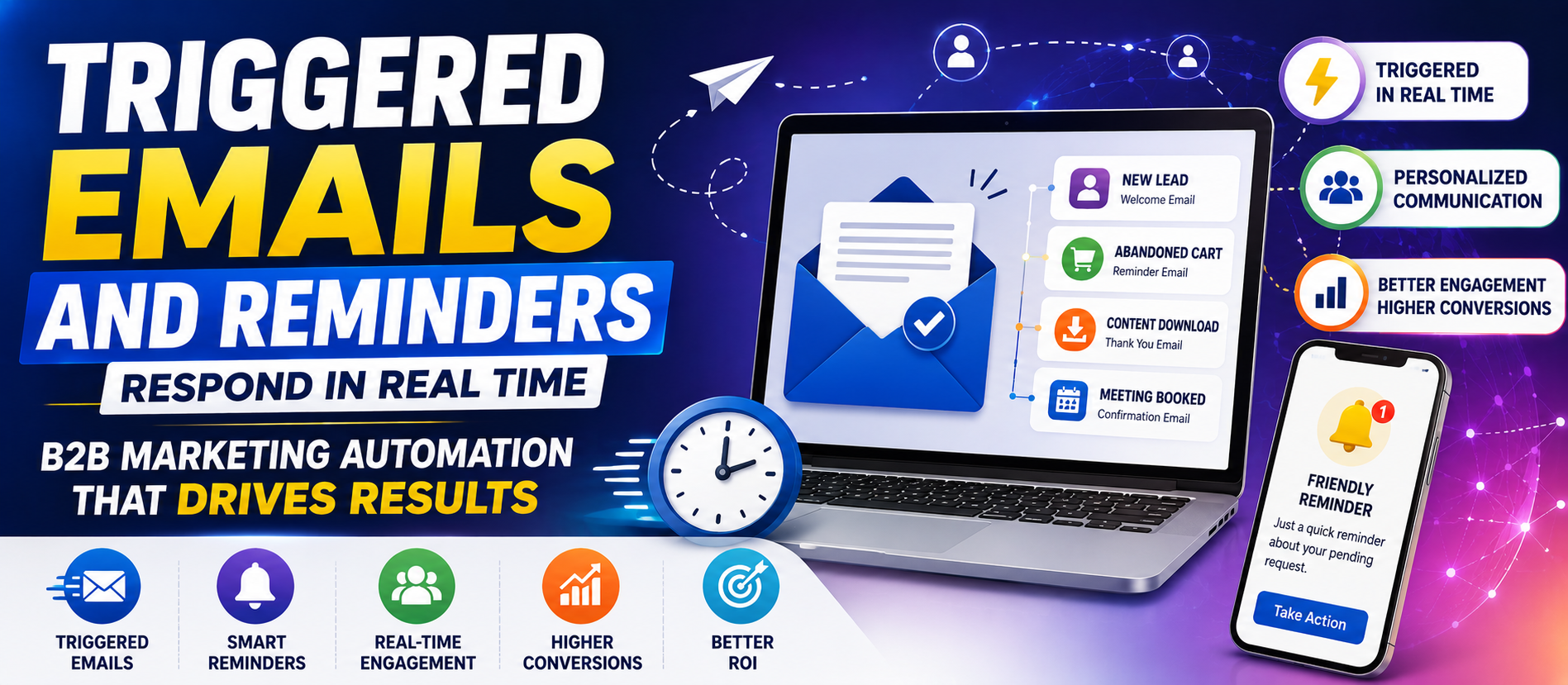
Triggered emails are automated messages sent in response to specific customer actions or predefined conditions. Unlike scheduled newsletters, triggered emails are event-driven, making them highly relevant and timely.
Examples include:
- Welcome emails after form submissions.
- Demo confirmation messages.
- Meeting reminders.
- Quotation follow-ups.
- Proposal reminders.
- Free trial onboarding.
- Renewal notifications.
- Customer satisfaction surveys.
Because these emails are closely aligned with customer intent, they generally achieve significantly higher engagement rates than standard marketing campaigns.
Why Real-Time Automation Matters in B2B Marketing
Modern B2B buyers expect immediate responses. Delayed communication often results in lost opportunities as prospects continue researching competitors.
Real-time automation enables businesses to acknowledge inquiries instantly, deliver requested resources immediately, schedule follow-up activities automatically, and keep prospects engaged throughout the buying journey.
Quick responses also demonstrate professionalism, improve customer confidence, and shorten the overall sales cycle.
Build Automated Welcome Sequences
The first interaction after a prospect submits a contact form or downloads a resource is critical. Rather than sending a simple confirmation email, businesses should build multi-step welcome workflows that introduce the company, explain available solutions, share educational content, and encourage further engagement.
This sequence establishes credibility while preparing prospects for future conversations with the sales team.
Automate Demo and Consultation Reminders
B2B organizations frequently schedule product demonstrations, discovery meetings, consultations, and webinars. Automated reminders reduce missed appointments while improving attendance rates.
Reminder workflows may include:
- Instant confirmation email.
- Calendar invitation.
- 24-hour reminder.
- One-hour reminder.
- Meeting preparation guide.
- Post-meeting follow-up.
These automated touchpoints create a more professional customer experience while reducing administrative work.
Behavior-Based Lead Nurturing
Marketing automation platforms continuously monitor customer activity.
For example:
- Repeated visits to pricing pages.
- Multiple downloads.
- Webinar registrations.
- Email engagement.
- Case study downloads.
- Product comparisons.
- Live chat interactions.
- CRM updates.
Each behavior can trigger personalized follow-up emails tailored to the prospect's interests, increasing relevance and conversion potential.
Integrate CRM with Email Automation
CRM integration creates a unified customer experience by synchronizing marketing and sales activities. Customer interactions automatically update contact records, trigger follow-up sequences, notify sales representatives, and personalize future communications.
This eliminates information silos while improving collaboration across departments.
Use AI to Improve Email Performance
Artificial Intelligence enhances triggered email campaigns through intelligent personalization and predictive analytics.
AI can:
- Generate subject lines.
- Recommend email timing.
- Predict customer intent.
- Identify sales-ready leads.
- Suggest personalized content.
- Optimize workflows.
- Analyze engagement trends.
- Recommend campaign improvements.
These capabilities allow businesses to create more effective campaigns while reducing manual optimization.
Automate Proposal and Quotation Follow-Ups
Many B2B opportunities are lost simply because businesses fail to follow up consistently after sending quotations.
Triggered reminders can automatically:
- Confirm proposal delivery.
- Share supporting case studies.
- Answer frequently asked questions.
- Schedule follow-up meetings.
- Provide updated offers.
- Notify sales representatives.
Consistent follow-up significantly improves proposal conversion rates.
Re-Engage Dormant Prospects
Some leads become inactive after initial engagement. Instead of removing them from marketing databases, automation workflows can reactivate interest by delivering updated content, new case studies, industry reports, webinar invitations, or product enhancements.
Re-engagement campaigns often recover opportunities that would otherwise disappear completely.
Measure Automation Performance
Successful B2B marketing automation requires continuous optimization.
Monitor metrics such as:
- Email open rates.
- Click-through rates.
- Meeting attendance.
- Lead conversion rates.
- Sales cycle length.
- Proposal acceptance rate.
- Customer engagement.
- Revenue attribution.
Regular analysis enables businesses to improve workflow efficiency and maximize marketing return on investment.
SEO, AEO & GEO Integration
Search Engine Optimization (SEO)
Triggered email campaigns encourage repeat website visits, promote valuable content, and increase engagement with educational resources that support long-term organic visibility.
Answer Engine Optimization (AEO)
Email content should answer customer questions directly, helping prospects quickly find accurate information while supporting conversational search behavior.
Generative Engine Optimization (GEO)
Publishing authoritative educational resources and consistently sharing them through automated workflows strengthens brand credibility across AI-powered search platforms.
Best Practices
- Personalize every communication.
- Respond immediately after customer actions.
- Keep messages concise and relevant.
- Segment audiences intelligently.
- Test subject lines regularly.
- Review automation workflows frequently.
- Integrate CRM and marketing platforms.
- Use analytics to guide optimization.
The most successful automation strategies prioritize customer value rather than simply increasing email frequency.
Common Mistakes to Avoid
- Sending generic emails.
- Ignoring customer behavior.
- Failing to personalize communication.
- Using outdated customer data.
- Not integrating CRM systems.
- Overloading prospects with excessive emails.
- Ignoring campaign analytics.
- Neglecting workflow maintenance.
Effective automation focuses on delivering timely, relevant, and helpful communication throughout the customer journey.
How Designfo Helps Businesses Build Intelligent Marketing Automation
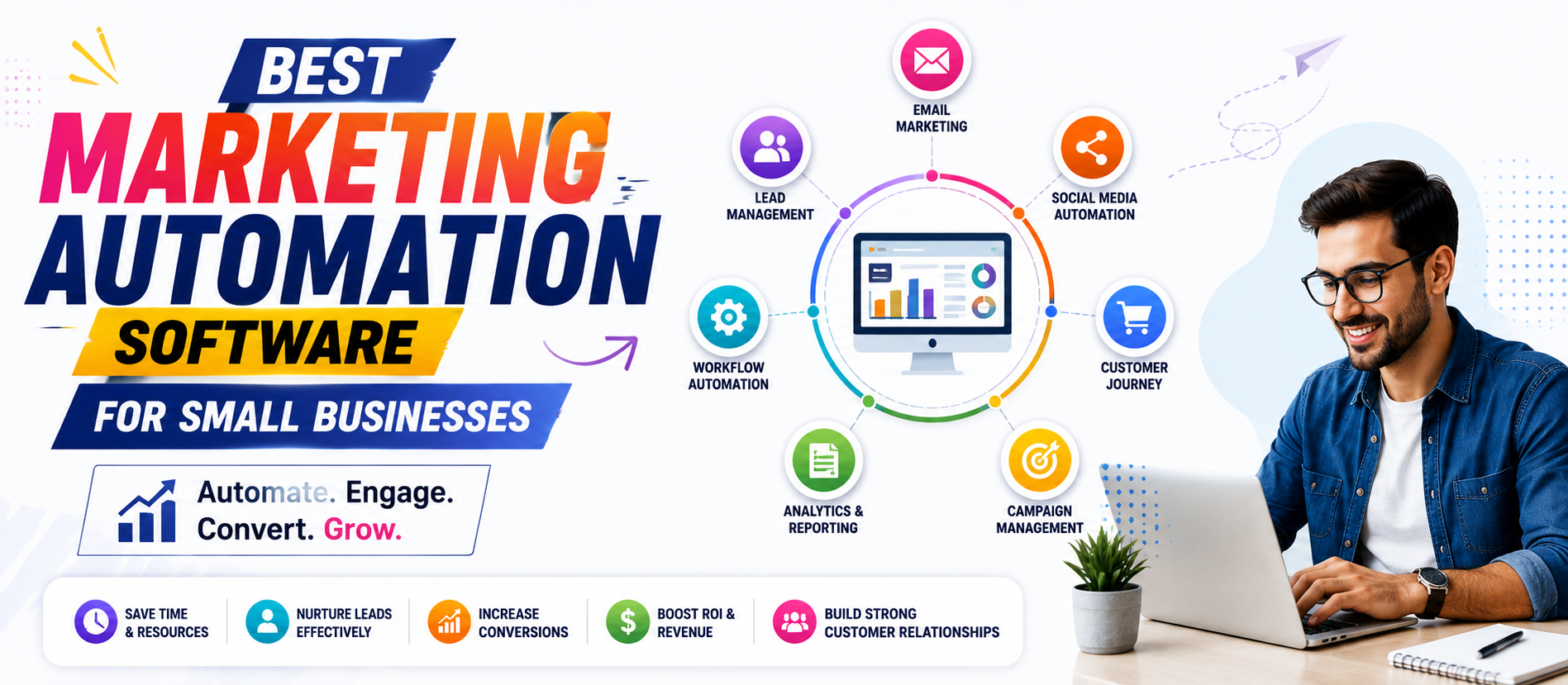
Designfo develops customized B2B marketing automation systems that integrate CRM platforms, AI-powered workflows, triggered emails, customer journey mapping, lead nurturing, SEO, analytics, and digital marketing into one intelligent business ecosystem.
Our automation solutions help businesses improve response times, generate qualified leads, increase sales conversions, streamline internal workflows, and strengthen long-term customer relationships.
Whether you're implementing your first automation platform or expanding enterprise-level marketing operations, Designfo delivers scalable solutions tailored to your business goals.
Frequently Asked Questions (FAQ)
What are triggered emails?
Triggered emails are automated messages sent immediately after specific customer actions or predefined business events, making communication timely and highly relevant.
Why are triggered emails effective in B2B marketing?
They deliver personalized communication when prospects are most engaged, improving response rates, customer experience, and overall conversion performance.
Can AI improve email automation?
Yes. AI enhances personalization, predicts customer intent, optimizes send times, recommends content, and improves campaign performance through continuous learning.
Should small businesses use marketing automation?
Absolutely. Automation helps businesses of all sizes improve efficiency, reduce manual work, nurture leads consistently, and scale customer communication without expanding marketing teams.
Conclusion
Triggered emails and real-time reminders have become essential components of successful B2B marketing automation. By responding instantly to customer behavior, integrating CRM systems, leveraging AI, and delivering personalized communication throughout the buying journey, businesses can improve lead nurturing, shorten sales cycles, and increase conversion rates.
Organizations that combine intelligent automation with SEO, AEO, GEO, educational content, and customer-focused communication create stronger digital experiences that support sustainable long-term growth. Rather than replacing human relationships, automation enables businesses to engage prospects more consistently, efficiently, and effectively.
If you're ready to build high-performing B2B marketing automation workflows, automate triggered emails, and improve customer engagement through AI-powered strategies, Designfo can help. Our experts develop customized automation solutions that integrate CRM, AI, analytics, SEO, and digital marketing into scalable systems designed for measurable business success.
Visit: www.designfo.in