Modern businesses compete in an environment where customers expect quick responses, personalized experiences, and consistent communication across multiple channels. Whether someone visits your website, subscribes to your newsletter, abandons a shopping cart, or requests a quotation, they expect relevant information at the right time. Managing these interactions manually becomes increasingly difficult as your business grows. This is where marketing automation becomes an essential part of digital marketing.
Marketing automation allows businesses to automate repetitive marketing tasks while delivering personalized experiences based on customer behavior. Instead of manually sending emails, tracking leads, updating customer records, or scheduling follow-ups, automation software performs these actions automatically according to predefined workflows. The result is greater efficiency, improved customer engagement, higher conversion rates, and better use of your marketing resources.
In this beginner's guide, you'll learn what marketing automation is, how it works, why it matters, its key benefits, popular use cases, and how artificial intelligence is making automation even more powerful in 2026.
What Is Marketing Automation?
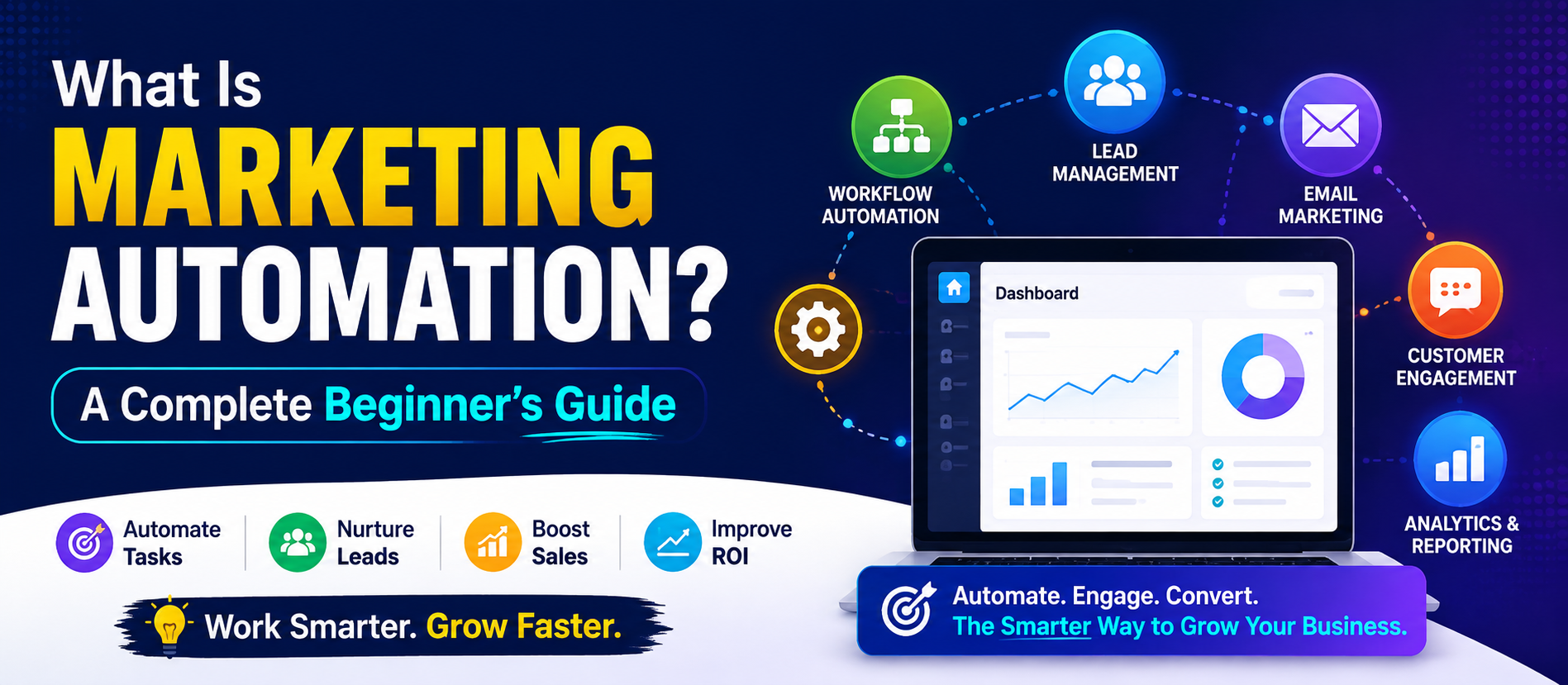
Marketing automation is the use of software platforms and digital technologies to automate repetitive marketing activities such as email campaigns, customer segmentation, lead nurturing, social media scheduling, SMS notifications, CRM updates, and customer follow-ups. These systems respond automatically to customer actions, ensuring that every interaction is timely, relevant, and personalized.
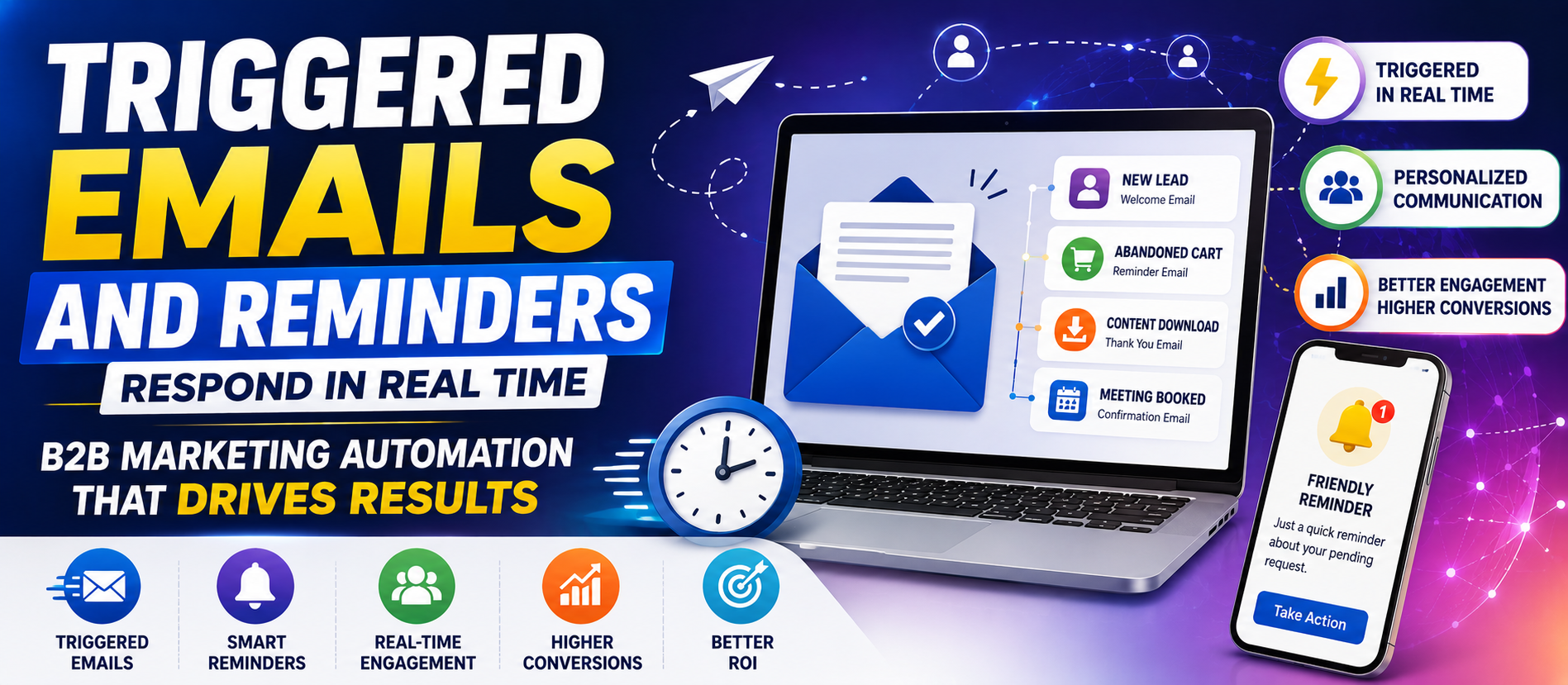
For example, when a visitor downloads a free guide from your website, an automation platform can instantly send a thank-you email, schedule educational follow-up messages over the next few days, notify your sales team if the visitor shows strong buying intent, and continue nurturing the lead until they become a customer. All of this happens without manual intervention.
Why Marketing Automation Matters
Today's consumers interact with businesses through websites, search engines, social media, mobile apps, email, messaging platforms, and online advertisements. Without automation, managing these interactions becomes time-consuming and inconsistent.
Get StartedWhy Marketing Automation Matters
Today's consumers interact with businesses through websites, search engines, social media, mobile apps, email, messaging platforms, and online advertisements. Without automation, managing these interactions becomes time-consuming and inconsistent. Marketing automation helps businesses stay connected with customers throughout their entire buying journey while maintaining a consistent brand experience.
Automation also improves productivity by reducing repetitive work. Marketing teams can spend more time creating valuable content, optimizing campaigns, and developing business strategies instead of performing manual administrative tasks.
How Marketing Automation Works
A marketing automation platform follows a structured process that transforms customer actions into automated responses.
1. Collect Customer Data
The system gathers information from website forms, newsletter subscriptions, landing pages, CRM software, social media campaigns, online purchases, and customer interactions. This data becomes the foundation for personalized marketing.
2. Segment Your Audience
Customers are grouped based on demographics, interests, purchase history, geographic location, browsing behavior, and engagement levels. Segmentation ensures that each audience receives relevant content instead of generic messages.
3. Create Automated Workflows
Businesses define automation rules such as "If a visitor downloads an eBook, send a welcome email." These workflows can include multiple steps, delays, conditions, and personalized messages.
4. Measure Performance
Marketing automation platforms continuously monitor campaign performance, including email open rates, click-through rates, conversion rates, customer engagement, and revenue attribution. These insights help marketers optimize future campaigns.
Key Benefits of Marketing Automation
Improved Productivity
Automation eliminates repetitive tasks, allowing marketing teams to focus on creativity, strategy, and customer relationships.
Better Lead Nurturing
Not every prospect is ready to buy immediately. Automated workflows educate and engage leads until they are prepared to make a purchasing decision.
Personalized Customer Experiences
Automation delivers personalized recommendations, targeted offers, and customized content based on customer behavior, increasing engagement and trust.
Higher Conversion Rates
Timely communication significantly improves the chances of converting visitors into paying customers. Automated follow-ups reduce missed opportunities.
Consistent Communication
Automation ensures every customer receives the right message at the right stage of the buying journey without delays or forgotten follow-ups.
Better Return on Investment
By improving efficiency and reducing manual work, marketing automation often delivers a higher return on marketing investment while lowering operational costs.
Popular Marketing Automation Use Cases
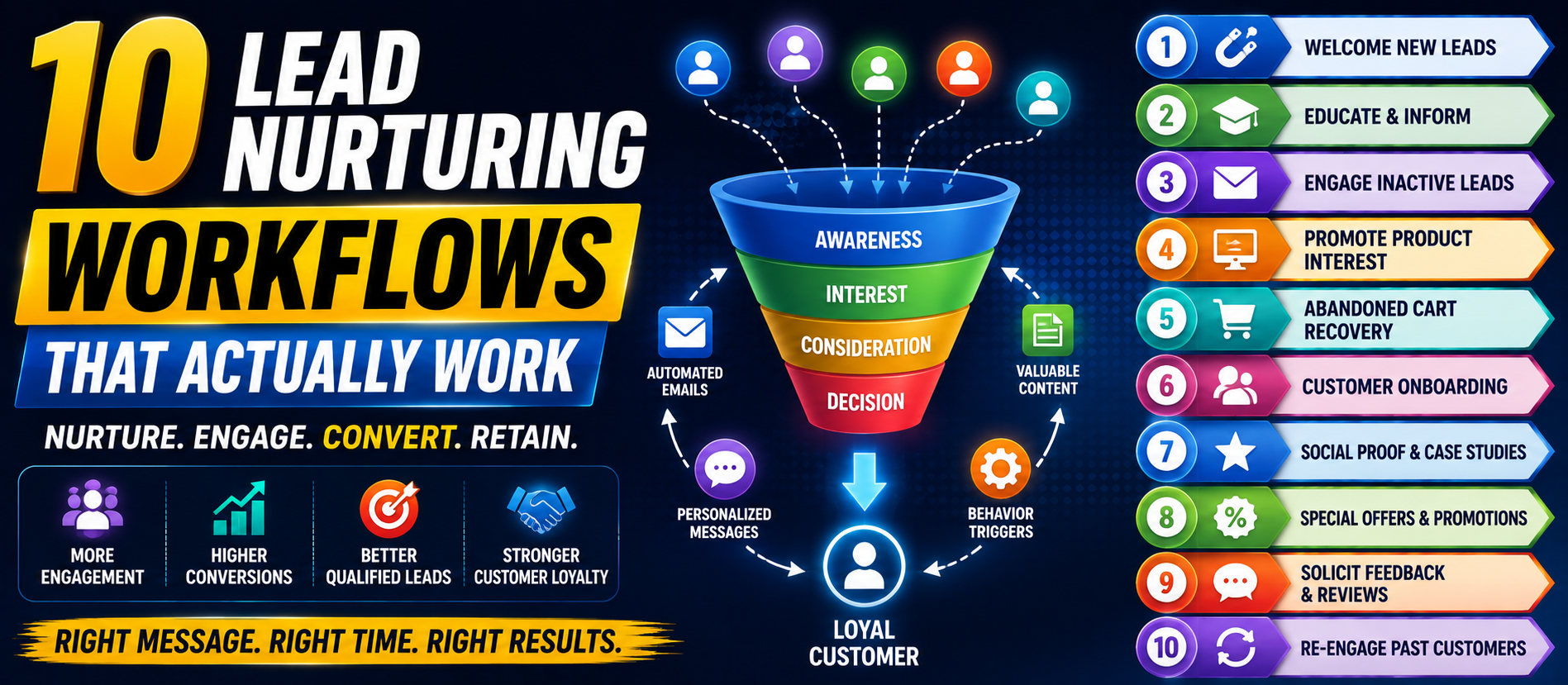
- Welcome email sequences for new subscribers.
- Abandoned cart recovery campaigns.
- Lead scoring and sales notifications.
- Customer onboarding programs.
- Event and webinar registrations.
- Birthday and anniversary promotions.
- Product recommendation emails.
- Customer satisfaction surveys.
- Re-engagement campaigns for inactive users.
- Automated review requests after purchases.
Essential Features of Marketing Automation Software
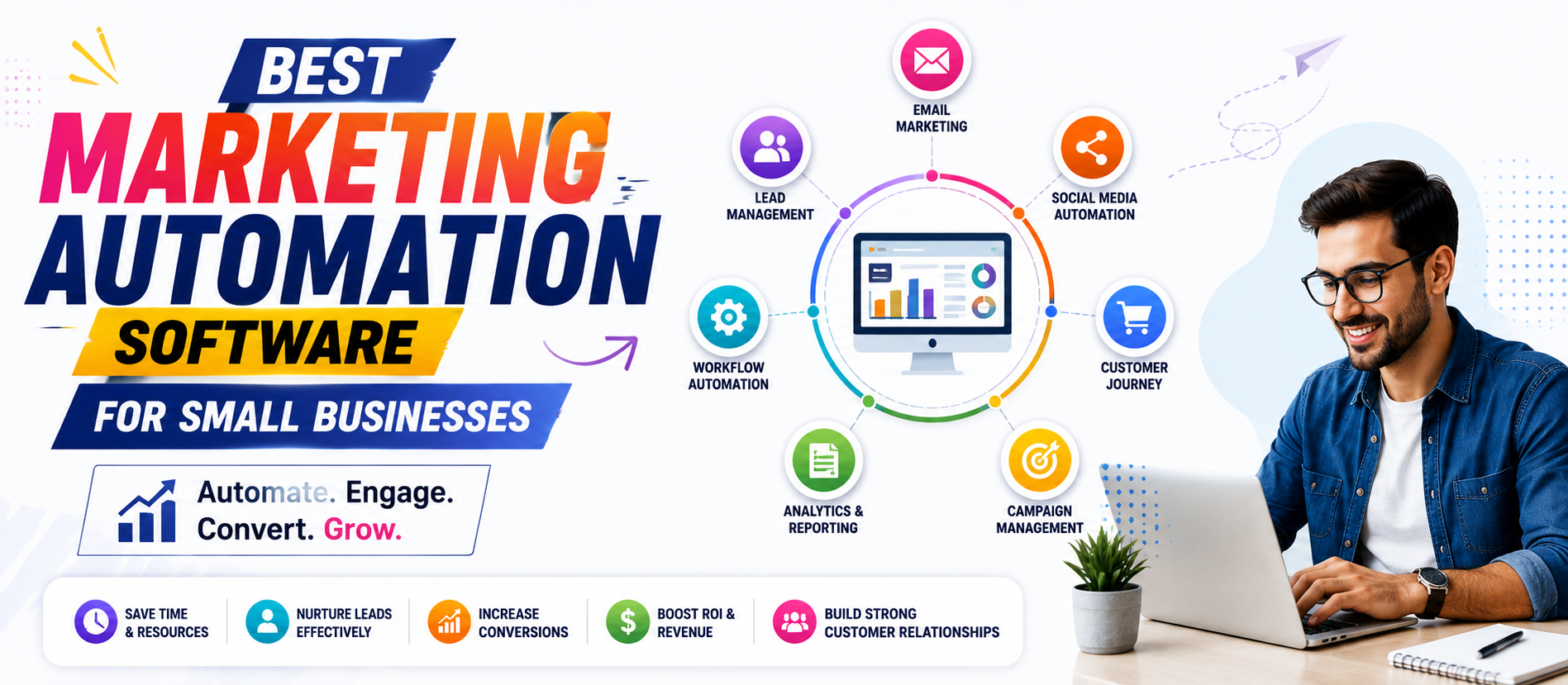
- Email marketing automation
- Lead management and scoring
- Customer segmentation
- CRM integration
- Landing page builders
- Social media scheduling
- Analytics and reporting dashboards
- A/B testing capabilities
- Multi-channel campaign management
- Artificial Intelligence recommendations
The Role of AI in Marketing Automation
Artificial Intelligence has transformed marketing automation from rule-based workflows into intelligent customer engagement systems. AI analyzes customer behavior, predicts purchasing intent, recommends personalized content, optimizes email delivery times, and generates marketing insights that would be difficult to identify manually.
In 2026, many automation platforms also use generative AI to create email copy, product descriptions, ad variations, chatbot responses, and customer support suggestions. AI enables businesses to deliver more relevant experiences while improving campaign performance.
Best Practices for Beginners
- Start with one or two simple workflows before building complex automation.
- Keep customer data accurate and regularly updated.
- Segment audiences instead of sending identical messages to everyone.
- Write personalized, value-driven email content.
- Monitor campaign performance regularly.
- Test subject lines, call-to-action buttons, and email timing.
- Ensure compliance with data privacy regulations.
- Continuously optimize workflows based on analytics.
Common Mistakes to Avoid
Many businesses automate too much too quickly, creating impersonal customer experiences. Others fail to maintain clean customer databases or neglect performance monitoring. Successful marketing automation balances efficiency with authentic communication. Automation should support relationships—not replace them.
How Designfo Can Help
Implementing marketing automation successfully requires more than software. It requires strategic planning, customer journey mapping, SEO-friendly content, CRM integration, and continuous optimization. Designfo helps businesses build modern digital marketing systems that combine automation, search engine optimization, AI-powered content strategies, website development, lead generation, and performance marketing to achieve measurable business growth.
Whether you're launching your first automated campaign or expanding an enterprise marketing strategy, Designfo provides customized solutions designed to improve efficiency, customer engagement, and long-term ROI.
Website: www.designfo.in
Frequently Asked Questions (FAQ)
Is marketing automation only for large businesses?
No. Small businesses, startups, and even solo entrepreneurs can benefit from marketing automation by saving time and improving customer communication.
Does marketing automation replace human marketers?
No. Automation handles repetitive tasks, while marketers focus on strategy, creativity, relationship building, and business growth.
Can marketing automation improve SEO?
While automation does not directly improve search rankings, it supports SEO by increasing user engagement, nurturing leads, promoting content, and improving customer retention.
Is AI important for marketing automation?
Yes. AI enhances automation by providing predictive analytics, personalized recommendations, intelligent customer segmentation, and content generation that improve campaign performance.
Conclusion
Marketing automation has become a fundamental component of successful digital marketing. By automating repetitive tasks, personalizing customer experiences, and integrating AI-driven insights, businesses can build stronger customer relationships while improving efficiency and increasing revenue. Whether you're running a small business or managing enterprise marketing campaigns, investing in marketing automation helps you stay competitive in today's rapidly evolving digital landscape.
If you're ready to implement intelligent marketing automation, improve your online visibility, and grow your business with modern SEO and AI-powered digital strategies, Designfo is here to help. Visit www.designfo.in to discover customized digital marketing solutions designed for long-term success.