- What is digital marketing?
Digital marketing is the process of promoting brands, products, and services through online platforms such as search engines, social media, email campaigns, websites, and digital advertisements. Designfo helps businesses build a strong online presence and connect with potential customers more effectively. - How is inbound marketing different from digital marketing?
Digital marketing mainly uses online tools and strategies to attract traffic and generate leads, while inbound marketing focuses on creating valuable experiences that naturally attract and engage customers over time. - Why is digital marketing important for modern businesses?
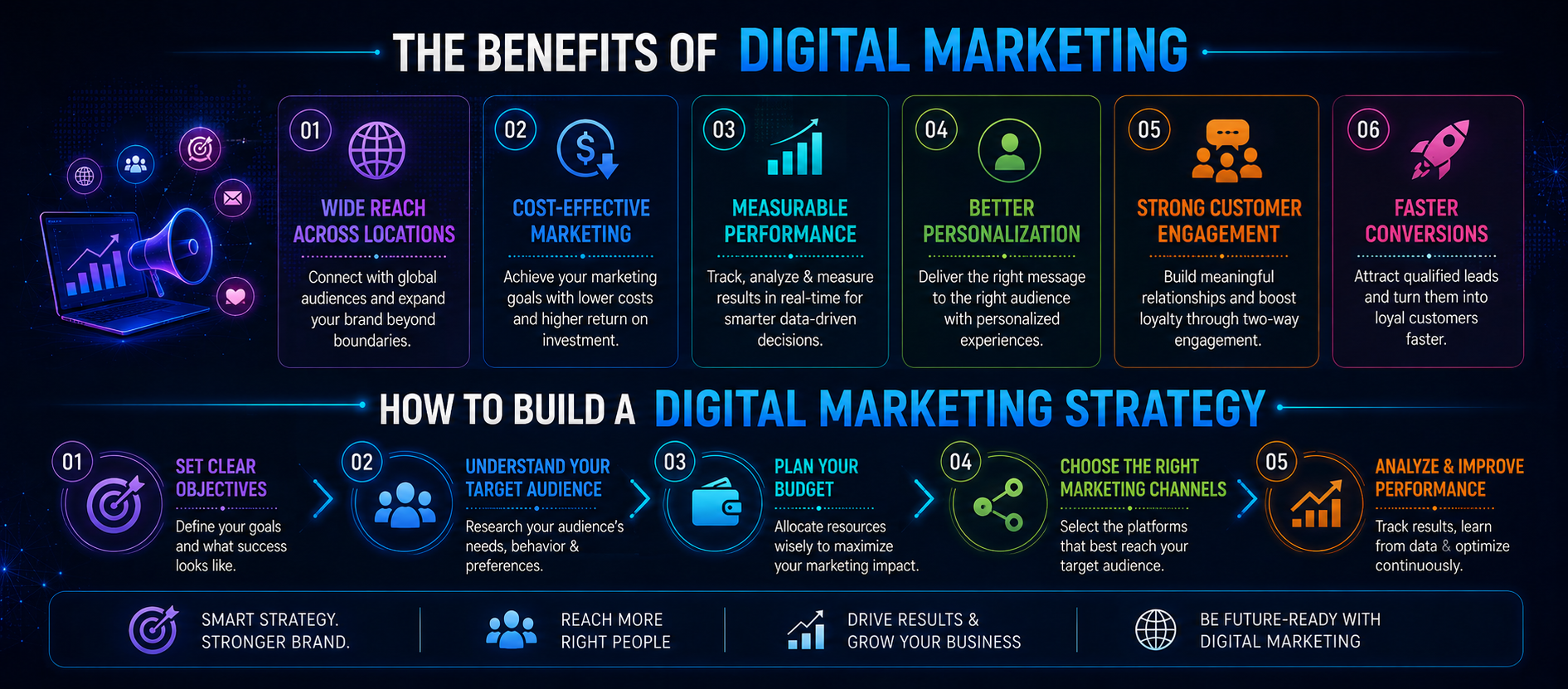
Digital marketing helps companies reach a wider audience, increase brand awareness, reduce marketing costs, track campaign performance, and create better customer relationships through targeted communication and personalized content. - What are the main types of digital marketing?
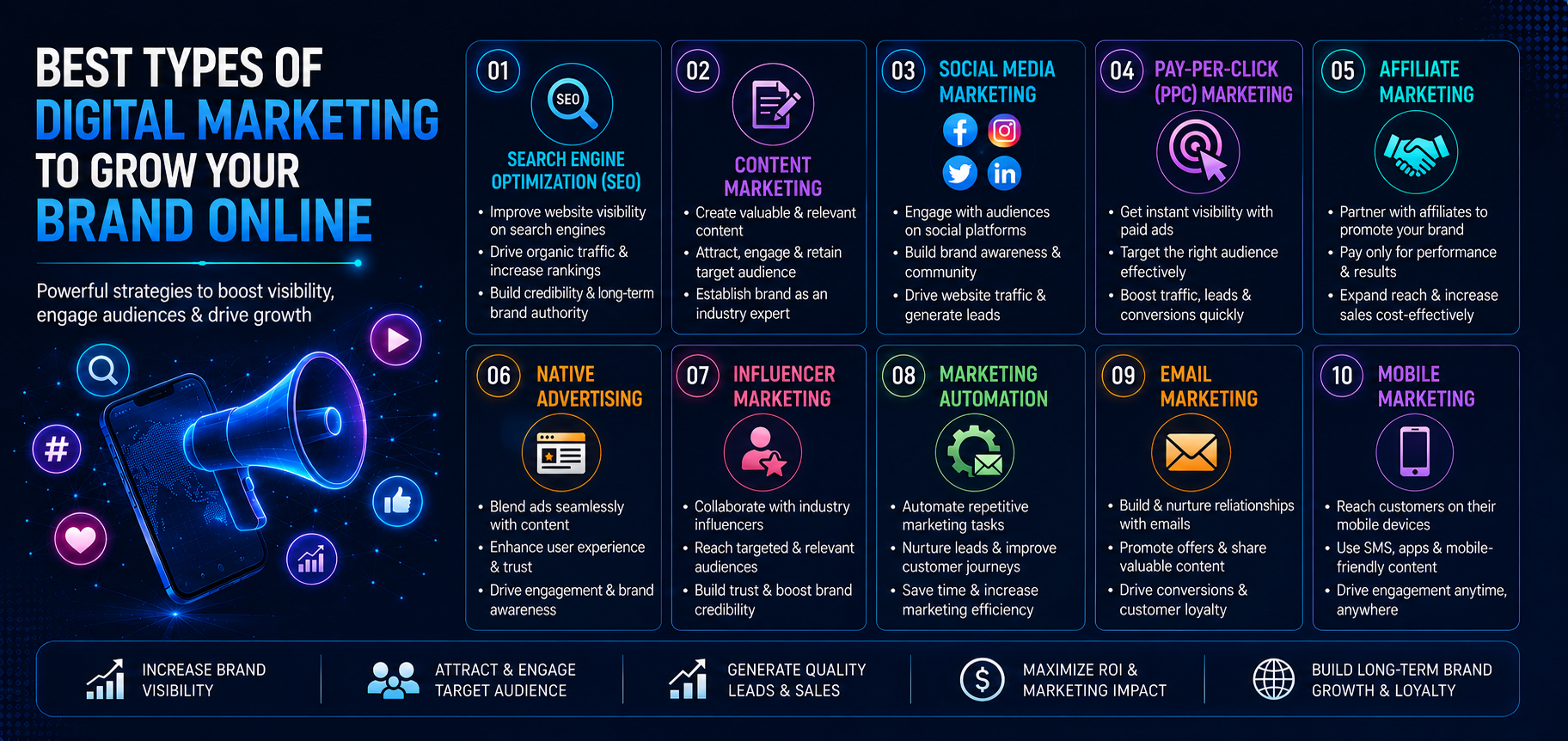
Some of the most effective digital marketing methods include search engine optimization (SEO), social media marketing, content marketing, pay-per-click advertising (PPC), email marketing, influencer marketing, affiliate marketing, video marketing, and online branding strategies. - How can businesses create a successful digital marketing strategy?
Businesses should begin by setting clear marketing goals, understanding their target audience, choosing suitable online platforms, creating engaging content, planning a realistic budget, and regularly analyzing campaign performance to improve future marketing results.
Digital marketing is often considered more flexible and measurable compared to traditional marketing methods like newspaper ads, flyers, billboards, and direct mail campaigns. While traditional advertising still has value, online marketing allows businesses to target audiences more precisely and track campaign performance in real time.
Today, internet usage continues to grow rapidly, with millions of people spending hours online every day. This creates huge opportunities for businesses to build their brand visibility, attract potential customers, and improve customer engagement through strong digital marketing strategies.
A well-planned digital marketing strategy helps businesses use channels like social media marketing, search engine optimization (SEO), pay-per-click advertising (PPC), content marketing, and email marketing to connect with both existing and new customers. These strategies also provide valuable performance insights through analytics and measurable conversion tracking.
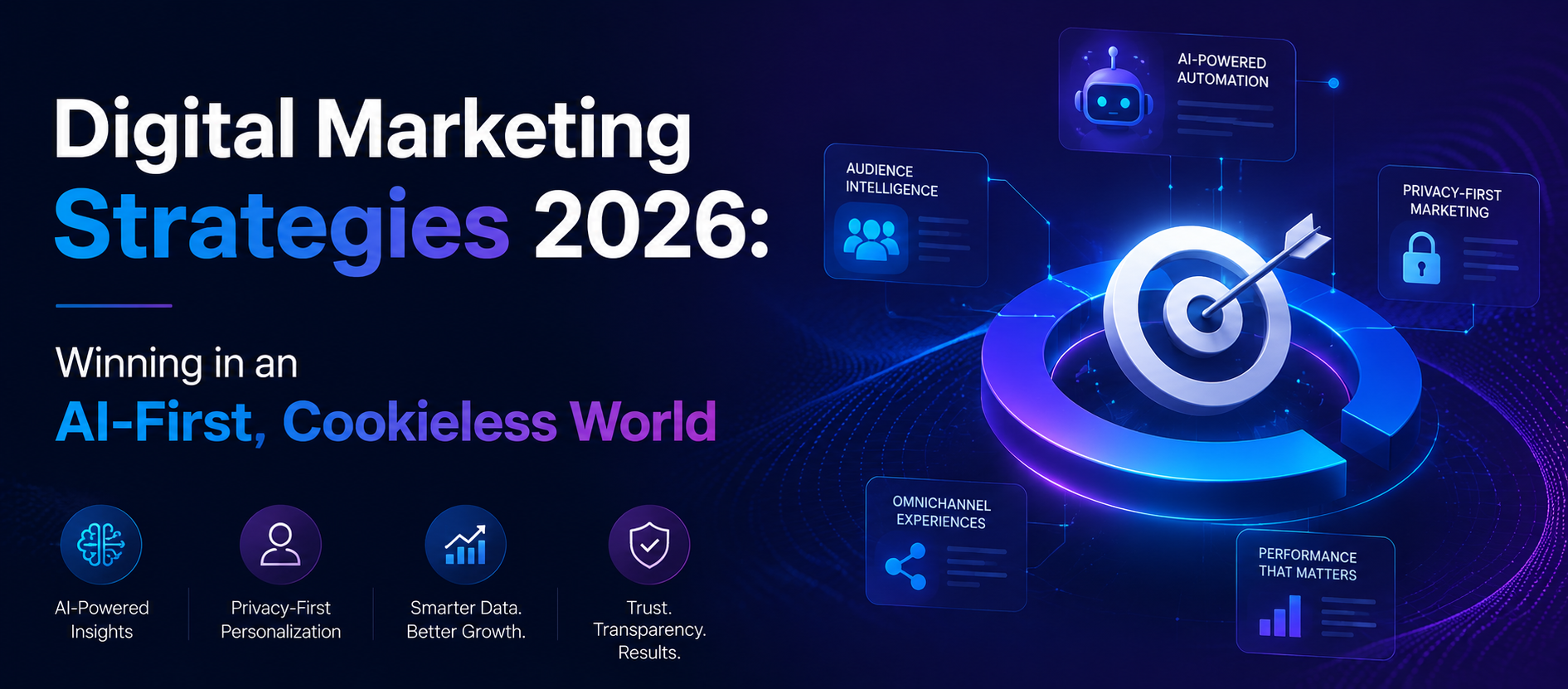
Modern digital marketing also supports automation and AI-powered tools that improve customer communication, campaign management, and personalized marketing experiences. Businesses using smart automation can save time, improve efficiency, and stay competitive in the fast-growing online marketplace.
Ready to grow your business?
Click to edit this text. Use it for a strong call-to-action that drives readers to take the next step.
Get StartedImportant Tools and Features of Digital Marketing
Inbound Marketing vs Digital Marketing
Why Is Digital Marketing Important?
Strengthen your digital presence
and reach potential customers effectively with professional marketing strategies by Designfo
Get StartedB2B vs B2C Digital Marketing
- In B2B marketing, customers usually take more time before making a purchase decision. The sales process is often longer because multiple people may be involved in approving the final decision. For this reason, B2B marketing focuses more on building trust, sharing detailed information, and creating long-term professional relationships.
- B2B audiences generally prefer content based on facts, data, case studies, and business value. Marketing materials such as reports, presentations, downloadable guides, and informative articles are highly effective because they can easily be shared among decision-makers within a company.
- On the other hand, B2C marketing is usually more direct and emotionally driven. Individual consumers often respond better to attractive offers, engaging advertisements, personalized experiences, and content that creates excitement or emotional connection with a brand.
- B2C customers also tend to make quicker buying decisions compared to B2B clients. Social media campaigns, influencer promotions, video marketing, and visually appealing content often perform very well in consumer-focused marketing strategies.