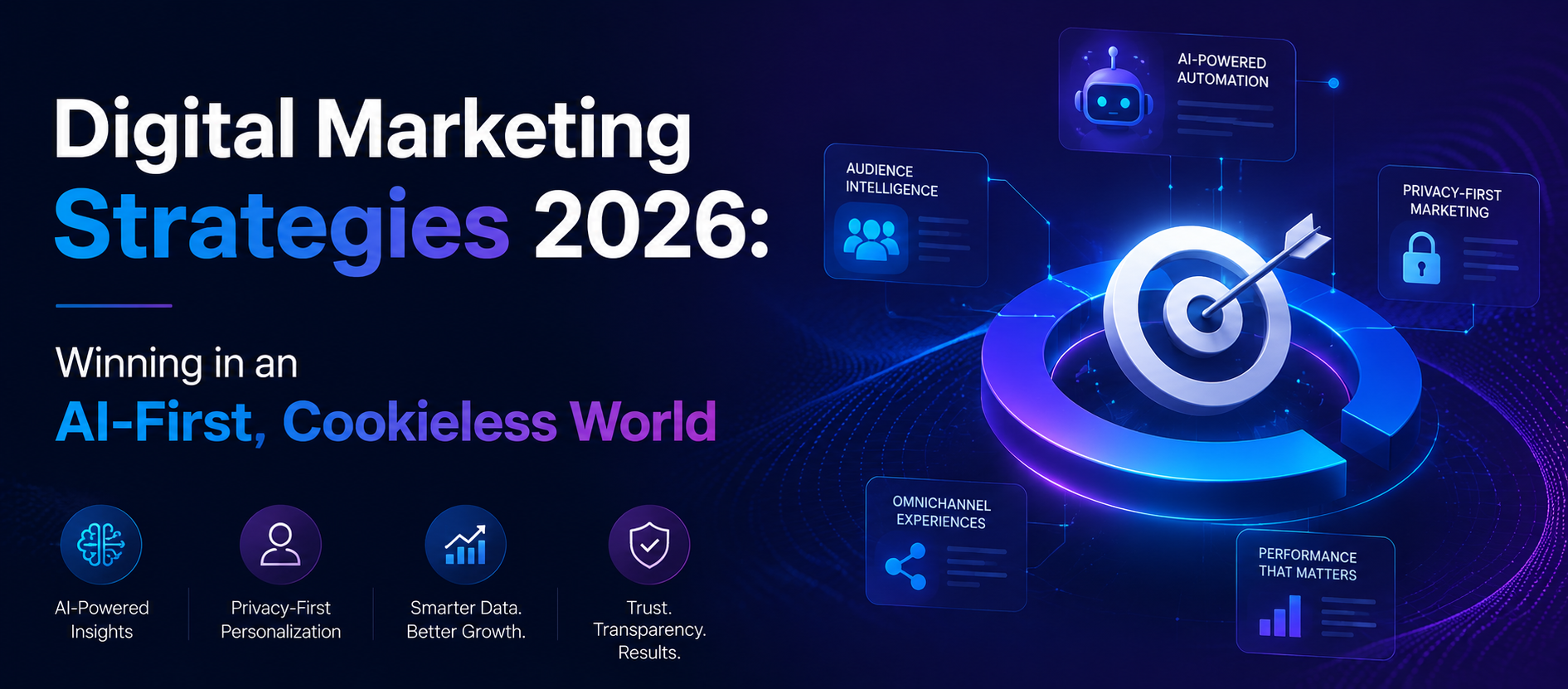
As companies enter a new online environment propelled by artificial intelligence, tighter privacy regulations, and changing consumer expectations, digital marketing tactics are constantly altering. In 2026, conventional marketing strategies that mostly relied on third-party cookies, wide targeting strategies, and simple keyword-focused SEO are losing their ability to produce long-term results.
Pro tip: Optimize content for AI search, voice search, and conversational queries.
Consumers today want more control over their online privacy and data security in addition to highly customized digital experiences. Simultaneously, AI-driven technologies, intelligent search engines, and automated marketing platforms are changing how consumers look for information, communicate with brands, and make purchases online.
The digital advertising business is moving away from traditional tracking techniques in favour of safer and more transparent marketing solutions as privacy-focused technologies gain importance. Maintaining client engagement, online exposure, and brand trust may be difficult for businesses that primarily use antiquated marketing strategies.
Instead of depending on aggressive advertising and excessive user tracking, businesses must develop more intelligent digital marketing strategies centred on valuable content, ethical data usage, personalized customer experiences, and stronger audience relationships if they want to succeed in this AI-first and cookieless environment.
What Businesses Can Expect from an AI-First, Cookieless Future
In 2026, a significant shift in the digital marketing sector is being brought about by the progressive elimination of third-party cookies. Stronger user privacy and data protection are now top priorities for web browsers and technological platforms, making earlier tracking and advertising techniques far less successful.
Artificial intelligence is also changing how people look for information online. To get answers more quickly and organically, users are increasingly embracing voice search, conversational enquiries, and AI-generated search experiences rather than just classic keyword searches.
Instead of just matching terms, modern search engines are also growing more adept at comprehending user behavior, search intent, and contextual significance. Businesses must reconsider how they handle online visibility and client involvement as a result of this change.
In order to stay competitive in this changing digital landscape, companies should concentrate on:
- Recognising the demands and search intent of customers
- Developing open and trustworthy marketing plans
- Providing personalised client experiences
- Engaging audiences with privacy-friendly techniques
- Producing useful and user-oriented content
Businesses that effectively adjust to these new digital trends will be in a better position to forge closer bonds with their clients, increase brand loyalty, and experience long-term, sustainable growth.
First-Party Information: Digital Marketing's Future
First-party data has emerged as one of the most crucial components of contemporary digital marketing tactics as third-party tracking techniques continue to vanish.
Information gathered directly from consumers via channels like website visits, purchase histories, email subscriptions, surveys, customer accounts, and loyalty programs is referred to as first-party data.
Because first-party information is derived directly from user interactions with a business, it is more accurate, dependable, and privacy-focused than third-party data. Additionally, consumers feel more at ease disclosing their information when they get something tangible in exchange, such as tailored suggestions, special deals, high-quality content, or loyalty points.
Many companies are increasingly making investments in the following to improve first-party data collecting and client engagement:
- Campaigns for email marketing
- Membership programs and online communities
- Interactive tests and questionnaires
- Systems for customer loyalty and rewards
- Platforms for reviews and comments
In a digital environment that prioritizes privacy, these tactics not only enhance audience personalization but also assist companies in building better customer interaction, deeper consumer trust, and enduring brand relationships.
AI-Powered SEO and Internet Search's Future
As artificial intelligence continues to impact how search engines present information, search engine optimisation is rapidly evolving. In 2026, "zero-click searches" will become more common as fewer people click directly on websites due to AI-generated search results, fast responses, and conversational search experiences.
Keyword rankings are no longer the only goal of modern SEO. Search engines are getting better at spotting content that offers readers real value, solid knowledge, and reliable information. Businesses are more likely to succeed in AI-driven search settings if they provide audience-focused, well-structured, and helpful content.
Nowadays, effective SEO tactics focus on:
- Creating comprehensive, subject-focused information
- Responding to consumer enquiries in a conversational and organic manner
- Content optimisation for voice and AI-powered search queries
- Increasing the authority and credibility of websites
- Publicising factual, evidence-based, and experience-based information
As AI-powered search continues to advance, businesses who rely solely on antiquated keyword-focused SEO strategies may find it difficult to stay visible online.
2026 Content Marketing: Putting Authenticity and Quality First
The struggle for viewers' attention is growing quickly as AI-generated content becomes more prevalent online. As a result, creating a lot of content is no longer as useful as being unique, reliable, and skilled.
It is no longer sufficient to publish a large number of low-quality articles in the current digital environment in order to attain high search rankings or audience engagement. Successful brands, on the other hand, are concentrating on producing worthwhile content that actually benefits consumers.
In 2026, successful content marketing tactics include:
- Instructional and problem-solving materials
- Expert insights and human storytelling
- Case-based data and practical experience
- Interactive and captivating content types
- Information that is factually correct and updated often
Content that exhibits strong EEAT principles—experience, expertise, authority, and trustworthiness—is now given priority by search engines. Authentic human-centered content is now one of the biggest benefits for long-term online success in an AI-first digital world.
AI-Powered Personalisation and Social Media
Artificial intelligence and intelligent recommendation algorithms are driving social media marketing more and more. By displaying material according to each user's unique interests, behaviour, and engagement patterns, platforms are emphasising personalised user experiences in 2026.
On all social media platforms, short-form videos, interactive content, live interaction, and community-focused discussions continue to draw in the most viewers. Content that feels genuine, interesting, and pertinent to their individual interests is now preferred by users.
Businesses are using AI-powered solutions to enhance social media marketing by automating operations like:
- Recommendations for tailored content
- Targeting and segmenting audiences
- Customer service and communications
- Optimisation of campaign performance
- Analytics and monitoring of engagement
Simultaneously, customers are getting pickier about the firms they engage with on the internet. While genuine narrative, insightful communication, and significant audience involvement are yielding better outcomes, highly promotional content is becoming less effective.
Companies that prioritise forming communities, communicating authentic brand narratives, and providing tailored experiences are fostering stronger consumer trust and enduring digital connections.
Advertising with a Privacy Focus and AI Automation
Additionally, digital advertising is changing to become more AI-driven and privacy-focused. Modern advertising systems use contextual targeting and AI analysis to deliver more relevant ads based on user interests and content behaviour, rather than largely relying on intrusive user tracking across websites.
Businesses are using artificial intelligence to boost advertising performance by:
- Advanced targeting of audiences
- Customer insights that are predictive
- Automated optimisation of advertisements
- Improved financial management
- Campaign tracking and reporting in real time
Businesses must uphold clear data gathering procedures and appropriately safeguard customer information as privacy concerns continue to rise. Maintaining consumer loyalty and long-term economic performance increasingly depend on trust and openness.
Adaptability, creativity, and customer-focused tactics will be crucial in helping firms remain competitive in the fast evolving digital landscape.
FAQs
1. Will SEO be useful in 2026?
Yes, SEO is still very important to digital marketing. However, search intent, content quality, user experience, authority, and optimisation for conversational and AI-powered search results are now more important aspects of current SEO.
2. Can content created by AI show up in search results?
Yes, if AI-assisted material is original, accurate, helpful, and offers significant information that actually benefits people, it can rank highly on search engines.
3. What is meant by zero-click search?
Search results that provide users with straight answers on the search page itself without requiring them to visit an external website are referred to as zero-click search results.
4. Will digital marketers be replaced by artificial intelligence?
No, AI is intended to help digital marketers by increasing productivity and automating tedious jobs. Successful marketing still requires human creativity, strategic thought, branding, and audience comprehension.
5. Describe contextual advertising.
Instead of following a person's browsing activities across numerous websites, contextual advertising is a privacy-focused advertising technique that displays ads based on the content of a webpage or user interest context.