Search is evolving rapidly. What began as a simple keyword-based system has transformed into an intelligent conversational ecosystem powered by Artificial Intelligence.
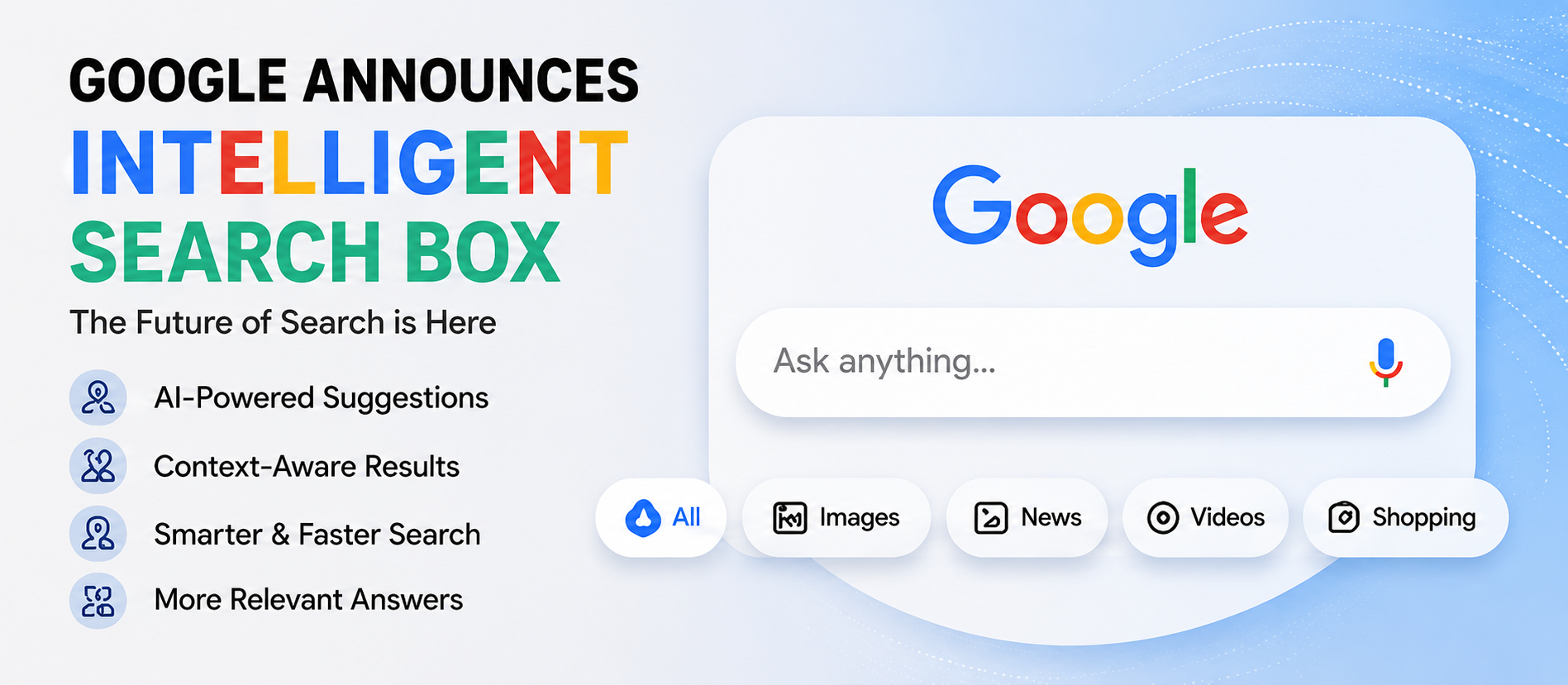
Google recently introduced major upgrades to its search experience through what many marketers now call the “Intelligent Search Box” — a more advanced AI-driven search interaction system designed to understand user intent more deeply than ever before.
At Designfo, we believe this marks one of the biggest shifts in SEO and digital marketing since the launch of mobile-first indexing.
Modern search is no longer only about matching keywords.
It is now about:
- Understanding intent
- Predicting behavior
- Personalizing results
- Delivering conversational answers
- Integrating AI assistance directly into search experiences
What Is Google’s Intelligent Search Box?
Google’s Intelligent Search Box combines:
- AI-generated suggestions
- Conversational interactions
- Predictive recommendations
- Contextual understanding
- Personalized search experiences
Instead of functioning like a traditional search bar, it increasingly behaves like an AI assistant.
Modern search systems can now:
- Understand follow-up questions
- Interpret context
- Predict user intent
- Analyze images
- Process voice interactions
- Deliver AI-generated summaries
This transforms search from:
- Query-based interaction
into:
- Conversational discovery
Why This Changes Seo Completely
Traditional SEO focused heavily on:
- Keywords
- Meta tags
- Backlinks
- Search rankings
But AI-driven search changes how users discover information online.
Today, users increasingly:
- Ask complete questions
- Use conversational prompts
- Search using voice
- Expect instant answers
- Interact through AI systems
This means websites must evolve from:
- Keyword-optimized pages
to:
- AI-readable knowledge systems
At Designfo, we call this:
AI-First SEO
The Rise of Conversational Search
Conversational search allows users to interact naturally with search engines.
Instead of typing:
“best seo company”
Users now ask:
“Which SEO company is best for AI-driven marketing in 2026?”
This shift dramatically changes how content should be structured.
Modern AI systems prioritize:
- Clear answers
- Contextual relevance
- Semantic relationships
- Structured information
- Trusted expertise
How Google Ai Understands Search Intent
Google’s AI systems now analyze:
- User history
- Search patterns
- Contextual signals
- Semantic meaning
- Behavioral intent
This allows search engines to deliver more personalized and relevant results.
AI can now distinguish between:
- Informational searches
- Transactional intent
- Research behavior
- Commercial comparisons
- Local discovery
Pro tip: At Designfo, we believe businesses that optimize for intent — not just keywords — will dominate future search ecosystems.
Why Structured Content Matters More Than Ever
AI search systems rely heavily on:
- Structured data
- Semantic HTML
- Entity relationships
- Machine-readable formatting
This means websites must provide information in ways AI can:
- Understand
- Extract
- Summarize
- Cite accurately
Modern SEO increasingly depends on:
- Topic clustering
- Schema markup
- Semantic relationships
- Knowledge architecture
How Ai Search Reduces Traditional Website Clicks
One major challenge businesses now face:
AI-generated answers reduce direct website traffic.
Search engines increasingly provide:
- AI summaries
- Quick answers
- Product comparisons
- Featured insights
without requiring users to visit external websites.
This creates a major shift:
Visibility matters more than clicks alone.
At Designfo, we help businesses optimize for:
- AI citations
- Conversational visibility
- Semantic discoverability
- Entity authority
The Importance of Entity-based Seo
Modern AI systems understand brands as entities.
This means search engines analyze:
- Brand mentions
- Industry relationships
- Author authority
- Contextual reputation
- Knowledge consistency
Businesses with strong entity signals are more likely to:
- Appear in AI summaries
- Gain conversational visibility
- Build trust signals
- Improve semantic relevance
Why Human-centered Content Still Wins
Despite rapid AI advancement, authentic human content remains critical.
AI-generated spam content often lacks:
- Original insights
- Real expertise
- Emotional connection
- Brand authenticity
At Designfo, we strongly believe:
AI should enhance content creation — not replace human strategy.
The most successful brands combine:
- Human creativity
with:
- AI-enhanced efficiency
How Designfo Prepares Businesses for Ai Search
📋 Quick Summary
- At Designfo, we help businesses adapt to intelligent search ecosystems through:- AI-first SEO- Semantic content systems- Structured data architecture- Technical SEO optimization- Entity-based visibility- Conversational content strategies
- Our goal is to help brands become:- Machine-readable- AI-discoverable- Semantically trusted- Future-ready
The Future of Search
Search engines are becoming:
- AI assistants
- Recommendation systems
- Conversational platforms
- Predictive interfaces
This means future SEO success will depend on:
- Structured knowledge
- AI visibility
- Semantic relevance
- Brand authority
- User trust
Businesses that continue relying only on:
- Traditional keywords
- Basic backlinks
- Generic blog content
will increasingly struggle in AI-powered search environments.
Final Thoughts
Google’s Intelligent Search Box represents a major transformation in digital discovery.
The future of SEO is no longer just about ranking pages.
It is about helping AI systems:
- Understand your business
- Trust your expertise
- Retrieve your information
- Recommend your brand
At Designfo, we believe businesses that adapt early to AI-driven search will dominate the next era of digital marketing.
Because modern visibility depends on far more than search rankings alone.