- What Is an Omnichannel Customer Messaging Strategy?
An omnichannel customer messaging strategy is a coordinated communication approach that allows businesses to interact with customers across multiple channels while maintaining c… - Why Omnichannel Messaging Matters
Today's customers expect convenience and flexibility. - The Role of WhatsApp in Customer Engagement
WhatsApp has become one of the world's most popular messaging platforms, making it an excellent channel for personalized customer communication. - Why Email Remains Essential
Despite the growth of instant messaging, email continues to be one of the most effective communication channels for businesses.
Customer communication has evolved dramatically over the past decade. Modern consumers no longer interact with businesses through a single communication channel. Instead, they expect seamless conversations across email, WhatsApp, SMS, websites, social media, mobile applications, and customer support platforms. Businesses that fail to deliver a consistent experience across these touchpoints often lose potential customers to competitors who provide faster and more personalized communication.
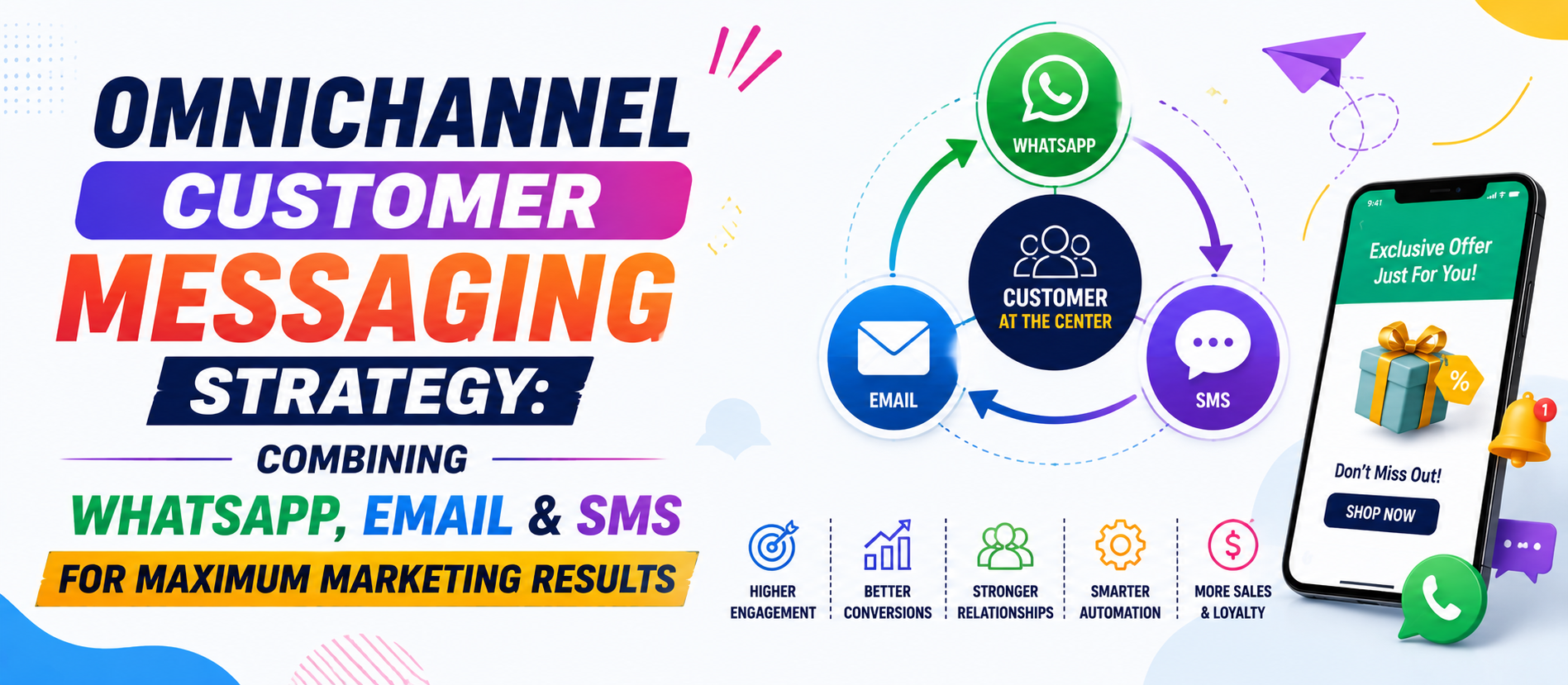
An effective Omnichannel Customer Messaging Strategy ensures customers receive the right message, through the right channel, at the right time. Rather than treating WhatsApp, Email, and SMS as separate marketing tools, successful organizations integrate them into one intelligent communication ecosystem. Combined with Artificial Intelligence (AI), Customer Relationship Management (CRM), and marketing automation, omnichannel messaging helps businesses improve engagement, increase conversions, strengthen customer loyalty, and deliver exceptional customer experiences.
This comprehensive guide explains how businesses can combine WhatsApp, Email, and SMS into a unified marketing strategy while supporting SEO, Answer Engine Optimization (AEO), Generative Engine Optimization (GEO), and AI-powered customer engagement.
What Is an Omnichannel Customer Messaging Strategy?
An omnichannel customer messaging strategy is a coordinated communication approach that allows businesses to interact with customers across multiple channels while maintaining consistent messaging and customer context.
Contact UsWhat Is an Omnichannel Customer Messaging Strategy?
An omnichannel customer messaging strategy is a coordinated communication approach that allows businesses to interact with customers across multiple channels while maintaining consistent messaging and customer context.
Unlike multichannel marketing, where each platform often operates independently, an omnichannel strategy connects every customer interaction. A customer who opens an email, clicks a WhatsApp message, or replies to an SMS continues the same conversation without losing context.
This unified experience improves customer satisfaction while increasing the likelihood of conversion.
Why Omnichannel Messaging Matters
Today's customers expect convenience and flexibility. Some prefer promotional emails, while others respond more quickly to WhatsApp notifications or SMS reminders. Businesses that communicate only through one channel risk missing valuable opportunities to engage their audience.
An integrated messaging strategy ensures customers receive relevant communications based on their preferences, behavior, and stage in the buying journey. It also reduces communication gaps between marketing, sales, and customer support teams.
By delivering timely and personalized messages, businesses can improve engagement while building stronger long-term relationships.
The Role of WhatsApp in Customer Engagement
WhatsApp has become one of the world's most popular messaging platforms, making it an excellent channel for personalized customer communication.
Businesses commonly use WhatsApp for:
- Order confirmations
- Appointment reminders
- Customer support
- Product recommendations
- Delivery notifications
- Promotional campaigns
- Feedback requests
- Lead qualification
Because WhatsApp conversations feel personal and immediate, businesses often experience higher engagement rates compared to traditional marketing channels.
Why Email Remains Essential
Despite the growth of instant messaging, email continues to be one of the most effective communication channels for businesses. It provides greater flexibility for educational content, newsletters, product launches, case studies, invoices, onboarding sequences, and long-form customer communication.
Email marketing also integrates seamlessly with marketing automation platforms, allowing businesses to deliver highly personalized customer journeys based on behavior, interests, and lifecycle stages.
Well-designed email campaigns remain one of the highest-performing digital marketing investments.
How SMS Complements the Customer Journey
SMS continues to deliver exceptional visibility because text messages are often read within minutes of delivery. This makes SMS particularly effective for time-sensitive communications.
Businesses frequently use SMS for:
- Verification codes
- Payment reminders
- Flash sales
- Appointment confirmations
- Shipping updates
- Event reminders
- Emergency notifications
- Limited-time promotions
When combined with WhatsApp and email, SMS creates a comprehensive communication ecosystem that reaches customers through multiple touchpoints.
Building an Integrated Customer Journey
An effective omnichannel strategy coordinates communication across every stage of the customer lifecycle.
A typical journey might include:
- Website visitor completes a contact form.
- Automated welcome email introduces the brand.
- WhatsApp message confirms inquiry receipt.
- Educational email sequence provides valuable information.
- SMS reminder encourages consultation booking.
- Personalized WhatsApp follow-up answers customer questions.
- Purchase confirmation via email and WhatsApp.
- Post-purchase satisfaction survey.
- Loyalty campaign based on customer behavior.
This coordinated communication creates a smooth and engaging customer experience from first contact through long-term retention.
Using AI and Marketing Automation
Artificial Intelligence significantly improves omnichannel messaging by analyzing customer behavior, predicting engagement, and personalizing communication automatically.
AI-powered marketing automation can:
- Segment audiences intelligently.
- Recommend optimal messaging times.
- Generate personalized content.
- Trigger workflows based on customer actions.
- Identify high-intent leads.
- Automate follow-up sequences.
- Analyze campaign performance.
- Optimize future communication.
This reduces manual work while improving customer experience and marketing performance.
Personalization Drives Better Results
Customers increasingly expect personalized communication rather than generic promotional messages. Businesses should use customer names, purchase history, browsing behavior, geographic location, and preferences to deliver highly relevant messaging.
Personalization improves open rates, click-through rates, customer satisfaction, and long-term loyalty while reducing unsubscribe rates.
SEO, AEO & GEO Integration
Search Engine Optimization (SEO)
Omnichannel messaging supports SEO by driving repeat website visits, promoting valuable content, encouraging user engagement, and strengthening customer relationships.
Answer Engine Optimization (AEO)
Email campaigns, WhatsApp messages, and SMS communications should answer customer questions clearly and direct users toward educational resources optimized for conversational search.
Generative Engine Optimization (GEO)
Publishing authoritative content and maintaining consistent messaging across all communication channels strengthens brand trust, improving visibility within AI-powered search ecosystems.
Key Performance Metrics
Businesses should monitor communication performance across every channel.
- Email open rates.
- Click-through rates.
- WhatsApp response rates.
- SMS delivery rates.
- Conversion rates.
- Customer retention.
- Customer lifetime value.
- Return on marketing investment.
Analyzing these metrics enables continuous optimization of messaging strategies.
Common Mistakes to Avoid
- Sending duplicate messages across every platform.
- Ignoring customer communication preferences.
- Over-communicating with subscribers.
- Using inconsistent branding.
- Failing to personalize messages.
- Neglecting automation workflows.
- Ignoring campaign analytics.
- Not integrating CRM data.
Successful omnichannel communication focuses on delivering value rather than increasing message frequency.
How Designfo Helps Businesses Build Omnichannel Messaging Systems
Designfo develops intelligent omnichannel communication solutions that integrate WhatsApp, Email, SMS, CRM platforms, AI-powered marketing automation, SEO, customer journey optimization, analytics, and digital marketing strategies into one scalable ecosystem.
Our customized automation workflows help businesses improve lead generation, customer engagement, retention, and long-term revenue through personalized communication delivered at the right time and through the right channel.
Whether you operate an eCommerce business, healthcare organization, educational institution, real estate company, or service-based business, Designfo creates communication systems tailored to your customer journey.
Frequently Asked Questions (FAQ)
What is omnichannel customer messaging?
It is a communication strategy that connects multiple messaging channels such as WhatsApp, Email, and SMS into one seamless customer experience.
Why should businesses combine WhatsApp, Email, and SMS?
Each channel serves different customer preferences. Combining them improves communication effectiveness, customer engagement, and overall marketing performance.
How does AI improve omnichannel messaging?
AI personalizes communication, automates workflows, predicts customer behavior, recommends content, and optimizes campaign timing for better engagement.
Is omnichannel messaging suitable for small businesses?
Yes. Modern automation platforms allow businesses of all sizes to implement cost-effective omnichannel communication strategies that scale as they grow.
Conclusion
An omnichannel customer messaging strategy is no longer optional for businesses that want to deliver exceptional customer experiences in today's digital marketplace. By combining WhatsApp, Email, and SMS into one coordinated communication system, organizations can engage customers more effectively, strengthen relationships, improve conversions, and build lasting brand loyalty.
Artificial Intelligence and marketing automation further enhance these strategies by delivering personalized communication at scale while reducing manual effort. Businesses that integrate omnichannel messaging with SEO, AEO, GEO, CRM systems, and AI-powered analytics create a competitive advantage that supports long-term digital growth.
If you're ready to transform customer communication through intelligent omnichannel messaging, Designfo can help. Our experts develop customized automation workflows that integrate WhatsApp, Email, SMS, AI, CRM, and digital marketing into scalable business solutions designed for measurable success.
Visit: www.designfo.in