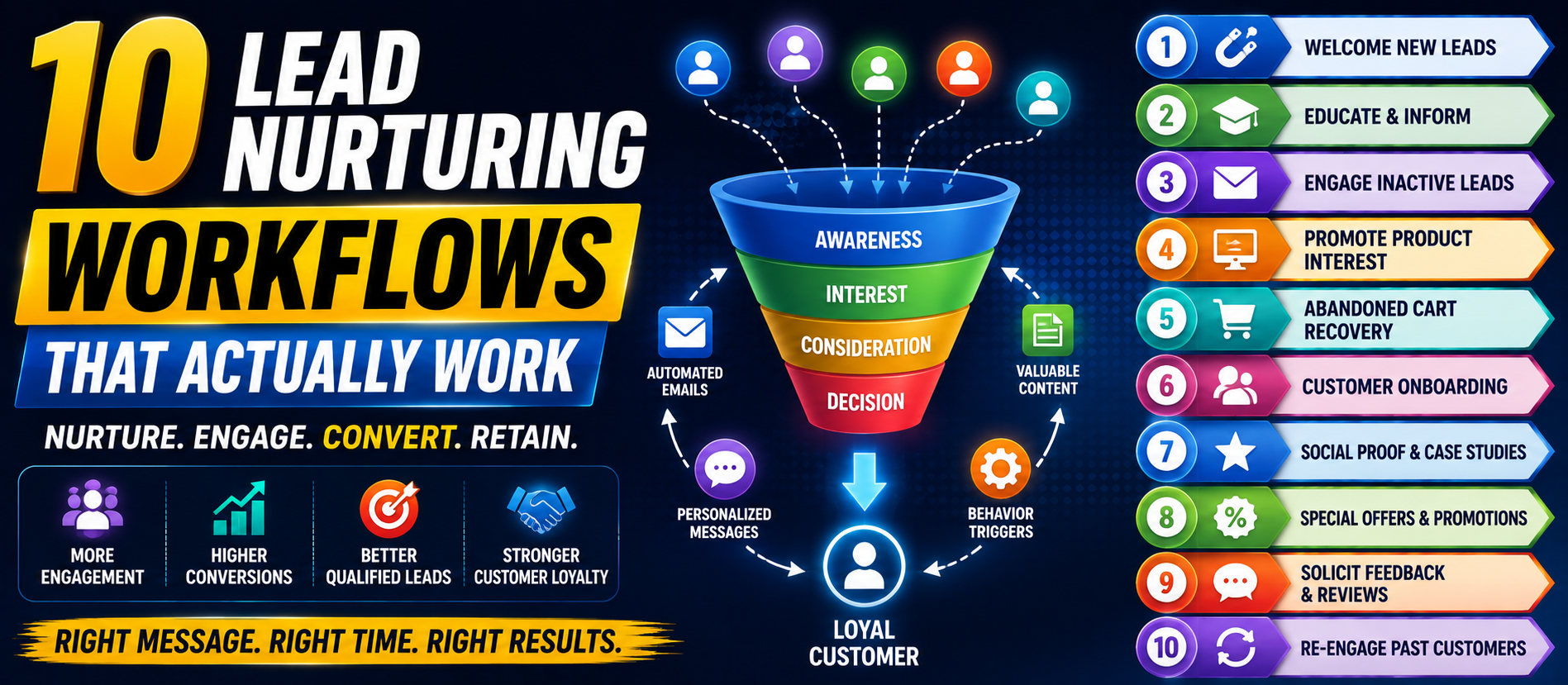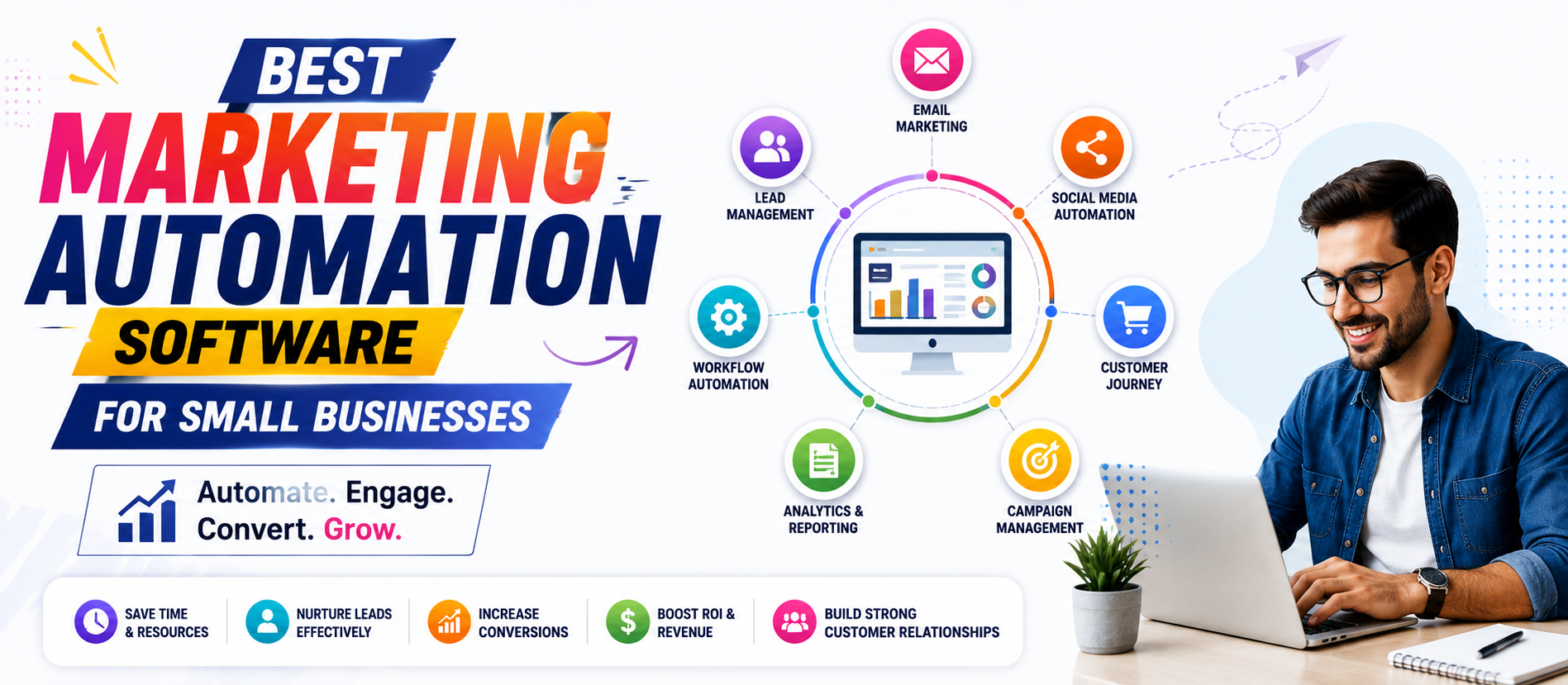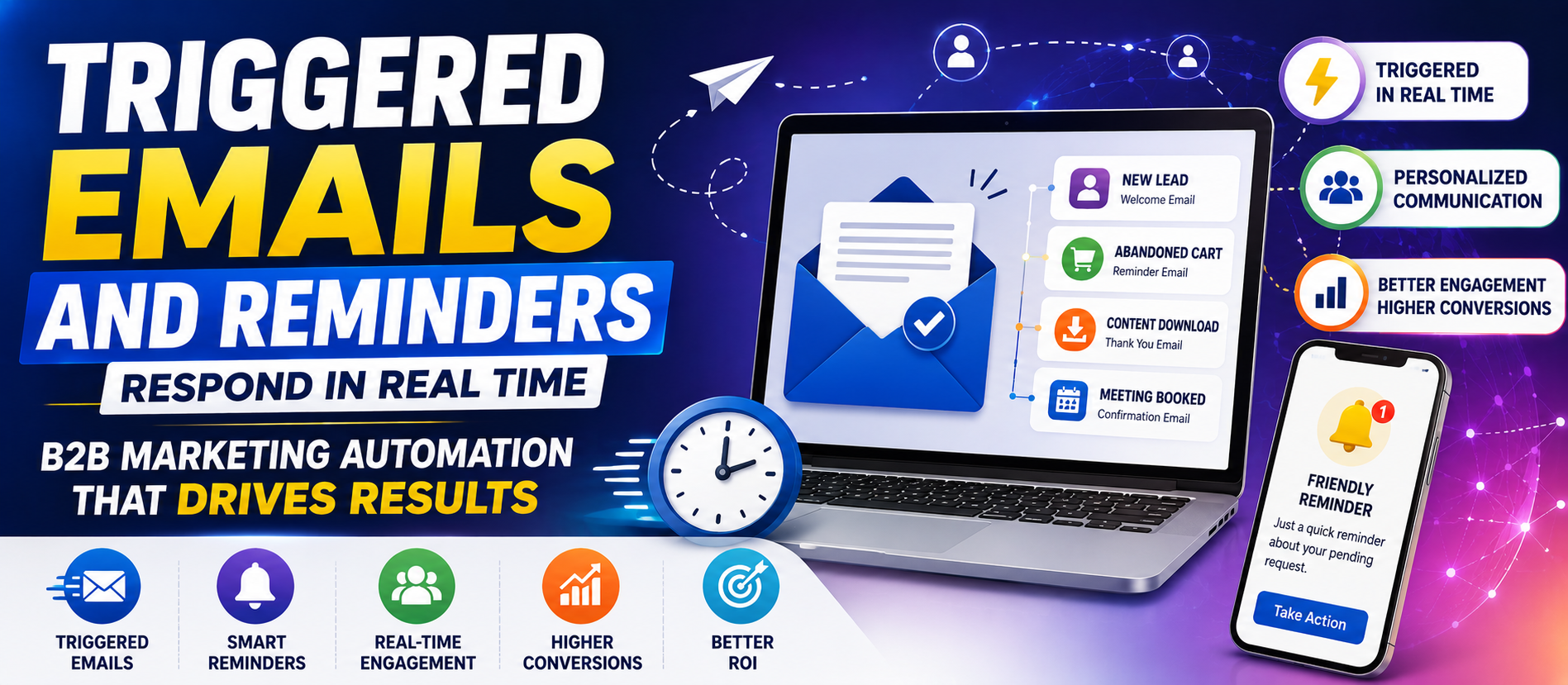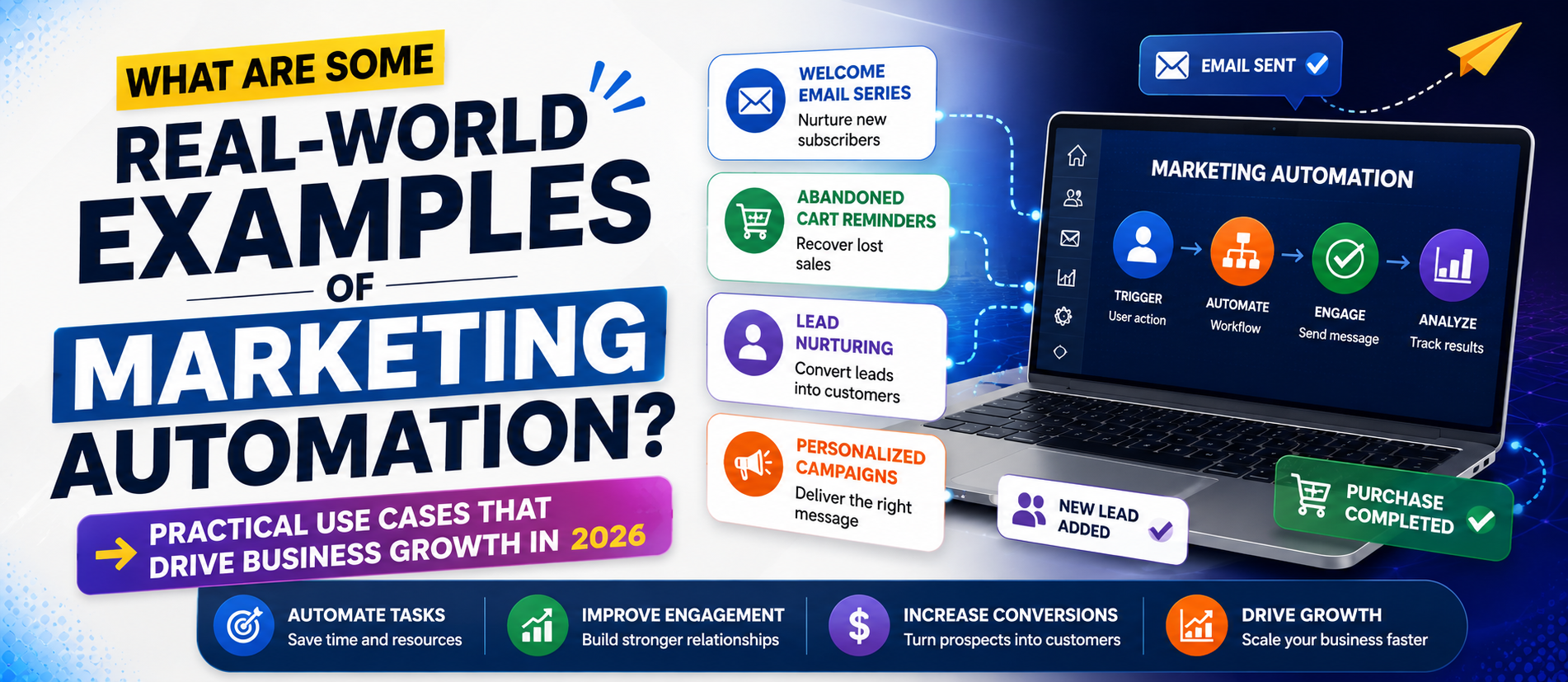
The biggest misconception about marketing automation is that it only benefits large enterprises. In reality, companies of every size—from local service providers to multinational organizations—use automation to eliminate repetitive tasks, improve customer communication, shorten sales cycles, and create personalized experiences that would be impossible to manage manually.
The true value of automation becomes clear when examining how successful businesses apply it in everyday operations. Instead of discussing abstract concepts, this guide explores practical, real-world marketing automation examples across multiple industries while highlighting how AI, SEO, Answer Engine Optimization (AEO), and Generative Engine Optimization (GEO) work together to create measurable business growth.
Example 1: Welcome New Website Visitors Automatically
A software company offers a free downloadable industry guide on its website. When a visitor submits the form, the automation platform immediately delivers the guide by email, thanks the visitor for their interest, introduces the company through a welcome sequence, and schedules additional educational emails over the following weeks.
Without automation, every one of these communications would require manual effort. Instead, every new lead receives a consistent onboarding experience regardless of when they visit the website.
Example 2: Recovering Abandoned Shopping Carts
An online clothing store notices that many customers leave products in their shopping carts without completing their purchases.
Rather than accepting lost sales, the store automatically sends reminders after one hour, twenty-four hours, and three days. Each message includes product images, customer reviews, and a direct checkout link.
Example 3: Real Estate Lead Qualification
A real estate agency receives hundreds of property inquiries every month.
Instead of contacting every prospect manually, automation asks follow-up questions regarding budget, preferred location, property type, and purchase timeline. Qualified buyers are automatically assigned to appropriate sales consultants, while long-term prospects receive educational market updates until they are ready to purchase.
This ensures agents spend more time with serious buyers rather than manually filtering inquiries.
Example 4: Healthcare Appointment Management
A medical clinic automates patient communication from appointment booking through post-treatment follow-up.
Patients receive:
- Appointment confirmations.
- Preparation instructions.
- Reminder notifications.
- Follow-up care information.
- Medication reminders.
- Patient satisfaction surveys.
- Annual check-up reminders.
- Health awareness updates.
This automation reduces missed appointments while improving the overall patient experience.
Example 5: Educational Course Enrollment
An online learning platform uses marketing automation to nurture prospective students.
After someone downloads a course brochure, automation gradually delivers instructor introductions, curriculum highlights, student success stories, webinar invitations, scholarship opportunities, and enrollment deadlines.
Instead of applying sales pressure, the institution builds trust through valuable educational content.
Example 6: B2B Proposal Follow-Up
A consulting company sends business proposals to prospective clients every week.
Rather than relying on manual reminders, automation schedules follow-up emails, shares case studies, answers common objections, and alerts consultants whenever prospects reopen proposal documents.
This timely engagement improves proposal conversion rates while reducing administrative work.
Example 7: Restaurant Customer Retention
A restaurant chain encourages repeat visits through personalized customer engagement.
Automation identifies guests who have not visited recently and sends customized offers, birthday greetings, seasonal menus, loyalty rewards, and reservation reminders based on previous dining preferences.
The result is stronger customer retention without requiring continuous manual marketing campaigns.
Example 8: Financial Services Client Education
A financial advisory firm publishes retirement planning guides, tax-saving articles, investment insights, and market updates.
Automation delivers relevant educational resources according to each client's interests, helping advisors build long-term trust before discussing financial products.
Educational nurturing creates more informed prospects and higher-quality consultations.
Example 9: AI-Powered Customer Support
An electronics retailer integrates AI chatbots with its automation platform.
Customers receive immediate assistance regarding warranties, returns, product compatibility, shipping, and troubleshooting. Complex inquiries automatically transfer to human support representatives along with complete conversation history.
This combination of AI and automation reduces response times while maintaining personalized service.
Example 10: Subscription Renewal Campaigns
A SaaS company prevents customer churn through automated renewal workflows.
Subscribers receive renewal reminders, feature updates, product tutorials, account usage reports, customer success stories, and upgrade recommendations before their subscriptions expire.
These communications encourage renewals while strengthening customer satisfaction.
Example 11: Event Registration Automation
A business conference organizer automates attendee communication.
Registered participants receive confirmation emails, speaker announcements, venue information, networking opportunities, session reminders, digital tickets, event updates, and post-event feedback requests.
The entire attendee journey is managed without requiring manual coordination.
Example 12: Multi-Channel Lead Nurturing
A digital agency combines website forms, WhatsApp, email, LinkedIn, and CRM software into one connected workflow.
Every new inquiry triggers personalized emails, WhatsApp confirmations, consultation scheduling, proposal delivery, and post-meeting follow-up automatically.
This integrated customer journey improves both lead quality and conversion efficiency.
Why These Examples Work
Although these industries differ significantly, they share several common automation principles.
- Respond immediately to customer actions.
- Deliver personalized communication.
- Reduce repetitive manual work.
- Support customers throughout the buying journey.
- Use behavioral data intelligently.
- Integrate multiple communication channels.
- Measure performance continuously.
- Improve customer experiences consistently.
Automation succeeds because it enhances customer relationships rather than replacing human interaction.
The Role of AI in Modern Marketing Automation
Artificial Intelligence extends traditional automation by enabling systems to make intelligent decisions.
Get StartedThe Role of AI in Modern Marketing Automation
Artificial Intelligence extends traditional automation by enabling systems to make intelligent decisions.
Modern AI platforms can predict customer intent, recommend products, personalize content, identify sales opportunities, generate marketing copy, optimize email timing, and forecast campaign performance.
Instead of following static workflows, AI continuously adapts communication based on customer behavior.
Supporting SEO, AEO & GEO
Search Engine Optimization (SEO)
Automation promotes educational content, encourages repeat website visits, improves user engagement, and strengthens long-term organic visibility.
Answer Engine Optimization (AEO)
Businesses can automatically distribute concise educational content that directly answers customer questions, improving visibility across conversational search experiences.
Generative Engine Optimization (GEO)
Consistently publishing authoritative resources while distributing them through intelligent automation strengthens brand credibility across AI-powered search platforms.
How Designfo Builds Real-World Marketing Automation Systems
Designfo helps organizations transform everyday business processes into intelligent automation workflows. Our team designs customized solutions that integrate websites, CRM platforms, AI assistants, WhatsApp, email marketing, customer analytics, workflow automation, SEO, and digital marketing into one connected ecosystem.
Instead of deploying generic software, we analyze each business's customer journey and create automation systems that improve operational efficiency while increasing customer engagement and revenue.
From startups to enterprise organizations, Designfo delivers scalable automation strategies built around measurable business objectives.
Frequently Asked Questions (FAQ)
What is the most common example of marketing automation?
Automated welcome email sequences remain one of the most widely used marketing automation workflows because they immediately engage new leads after form submissions or newsletter subscriptions.
Can small businesses use marketing automation?
Absolutely. Small businesses often benefit significantly from automation because it reduces manual work while improving customer communication without requiring additional staff.
Does marketing automation only involve email?
No. Modern automation includes email, SMS, WhatsApp, CRM systems, chatbots, push notifications, social media, advertising platforms, customer support tools, and AI-powered workflows.
How does AI improve marketing automation?
AI enhances automation by personalizing communication, predicting customer behavior, optimizing campaigns, recommending content, and providing intelligent business insights.
Conclusion
Real-world marketing automation extends far beyond automated emails. Across industries including healthcare, education, finance, retail, real estate, SaaS, hospitality, and professional services, businesses use automation to improve customer experiences, streamline operations, increase sales, and build lasting relationships.
The most successful organizations treat automation as a strategic business capability rather than simply a marketing tool. By integrating Artificial Intelligence, CRM systems, SEO, AEO, GEO, analytics, and personalized communication, companies create customer experiences that are both scalable and genuinely valuable.
If you're ready to implement practical marketing automation tailored to your business, Designfo can help. We design AI-powered automation ecosystems that combine digital marketing, customer journey optimization, CRM integration, analytics, and workflow automation to drive measurable business growth in 2026 and beyond.
Visit Designfo: www.designfo.in