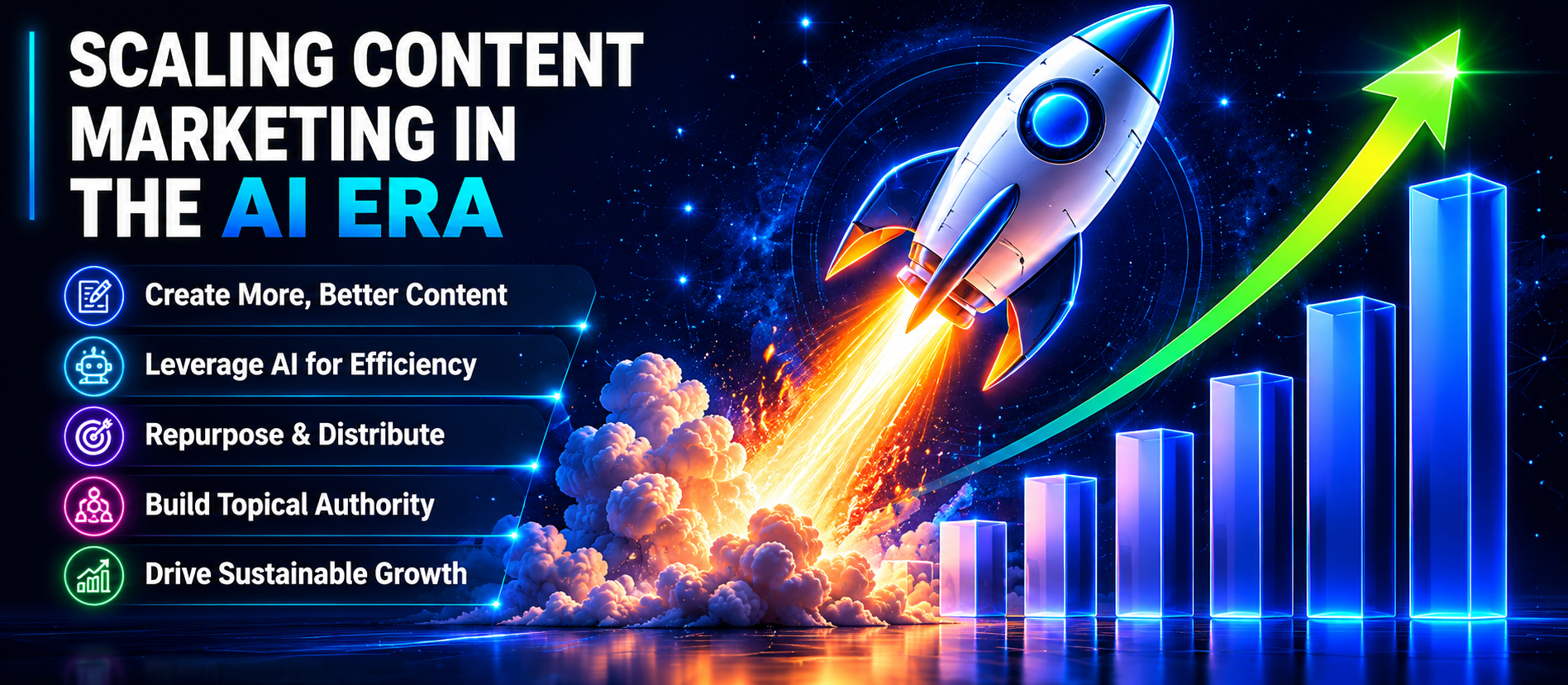
Content marketing has become one of the most powerful tools for building online authority, improving SEO visibility, and attracting long-term customers. But as competition increases across every industry, businesses face a major challenge:
How do you scale content production without sacrificing quality?
In 2026, scaling content is no longer simply about publishing more blog posts. Modern search engines and AI systems increasingly prioritize:
- Expertise
- Originality
- Structured information
- Brand authority
- User engagement
- Semantic relevance
At Designfo, we believe successful content scaling requires a balance between:
- Human creativity
- AI-assisted workflows
- Technical SEO
- Strategic planning
- Content operations
Why Content Scaling Matters More Than Ever
Businesses today compete in an environment where:
- AI-generated content floods the internet
- Search competition is increasing rapidly
- Google AI Overviews reduce click-through rates
- Social algorithms change constantly
- Users consume content across multiple platforms
This means brands need:
- Consistent visibility
- High publishing efficiency
- Strong topical authority
- Multi-format content systems
Companies that fail to scale content often struggle to maintain relevance in modern digital ecosystems.
The Biggest Mistake Businesses Make
- Many companies try to scale content by: Hiring large content teams quickly, Publishing low-quality AI articles, Outsourcing without editorial control, Chasing keyword volume blindly
- This usually creates: Generic content, Weak engagement, Low trust signals, SEO instability, Poor conversion performance
At Designfo, we strongly believe:
Scaling low-quality content only scales poor results.
What Modern Content Scaling Really Means
True content scaling means building systems that allow businesses to:
- Publish consistently
- Maintain quality
- Improve SEO performance
- Adapt content efficiently
- Repurpose information across platforms
Modern content systems should include:
- Editorial workflows
- AI-assisted optimization
- Semantic SEO structures
- Content repurposing pipelines
- Performance tracking systems
The Role of Ai in Content Scaling
AI tools have transformed content operations dramatically.
Modern AI systems can assist with:
- Topic research
- SEO analysis
- Content outlines
- Headline creation
- Content summaries
- Workflow automation
- Personalization
- Internal linking suggestions
However, AI alone is not enough.
Businesses relying entirely on automated content often struggle because AI-generated material can become:
- Repetitive
- Generic
- Factually weak
- Emotionally flat
At Designfo, we recommend using AI as:
- A productivity enhancer
not:
- A replacement for strategic expertise
Why Human Editorial Control Still Matters
Even in the AI era, human oversight remains critical.
Strong editorial systems help maintain:
- Brand voice
- Content accuracy
- Original perspectives
- Audience trust
- Strategic consistency
Human editors also ensure content aligns with:
- Business goals
- SEO strategies
- Audience expectations
- Brand authority positioning
Pro tip: This combination of AI efficiency and human creativity creates the strongest long-term content strategy.
How Top Brands Scale Content Successfully
Successful brands often scale content through:
- Standardized workflows
- Reusable content frameworks
- SEO-driven content clusters
- AI-assisted drafting
- Multi-platform repurposing
Instead of creating isolated articles, they build:
- Content ecosystems
These ecosystems connect:
- Blog posts
- Videos
- Email campaigns
- Social content
- Landing pages
- AI-search optimized knowledge hubs
The Importance of Topical Authority
Search engines increasingly reward websites that demonstrate:
- Consistent expertise
- Deep topic coverage
- Semantic relationships
- Structured knowledge
This is called topical authority.
At Designfo, we recommend building:
- Topic clusters
- Pillar content systems
- Interconnected knowledge structures
because AI-powered search systems increasingly evaluate:
- Content relationships
- Contextual relevance
- Entity associations
not just isolated keywords.
Content Repurposing Is Essential
One of the smartest ways to scale content is through repurposing.
A single high-quality article can become:
- LinkedIn posts
- YouTube scripts
- Instagram carousels
- Email newsletters
- Podcast topics
- Twitter threads
- AI-search snippets
This increases:
- Reach
- Efficiency
- Brand consistency
- SEO visibility
without constantly creating content from scratch.
How Designfo Approaches Content Scaling
At Designfo, we focus on building scalable content systems that combine:
- AI optimization
- Technical SEO
- Human creativity
- Structured workflows
- Multi-platform visibility
Our strategy includes:
- Semantic SEO architecture
- AI-friendly formatting
- Topic clustering
- Entity-based optimization
- Intelligent repurposing systems
Because future digital growth depends on both:
- Quality
and:
- Scalability
The Future of Content Scaling
The future of content marketing belongs to brands that can:
- Scale efficiently
- Maintain originality
- Build trust
- Adapt rapidly
- Optimize for AI visibility
- Deliver real value
Businesses that continue producing:
- Generic mass content
- Keyword-stuffed articles
- Low-quality AI spam
will increasingly struggle in modern search ecosystems.
Final Thoughts
Scaling content is no longer just about volume.
Modern content success depends on:
- Strategic systems
- AI-enhanced workflows
- Human creativity
- Technical SEO
- Audience trust
- Semantic authority
At Designfo, we believe the businesses that master intelligent content scaling will dominate the next era of digital marketing.
Because in the AI era, scalable quality matters far more than scalable quantity.