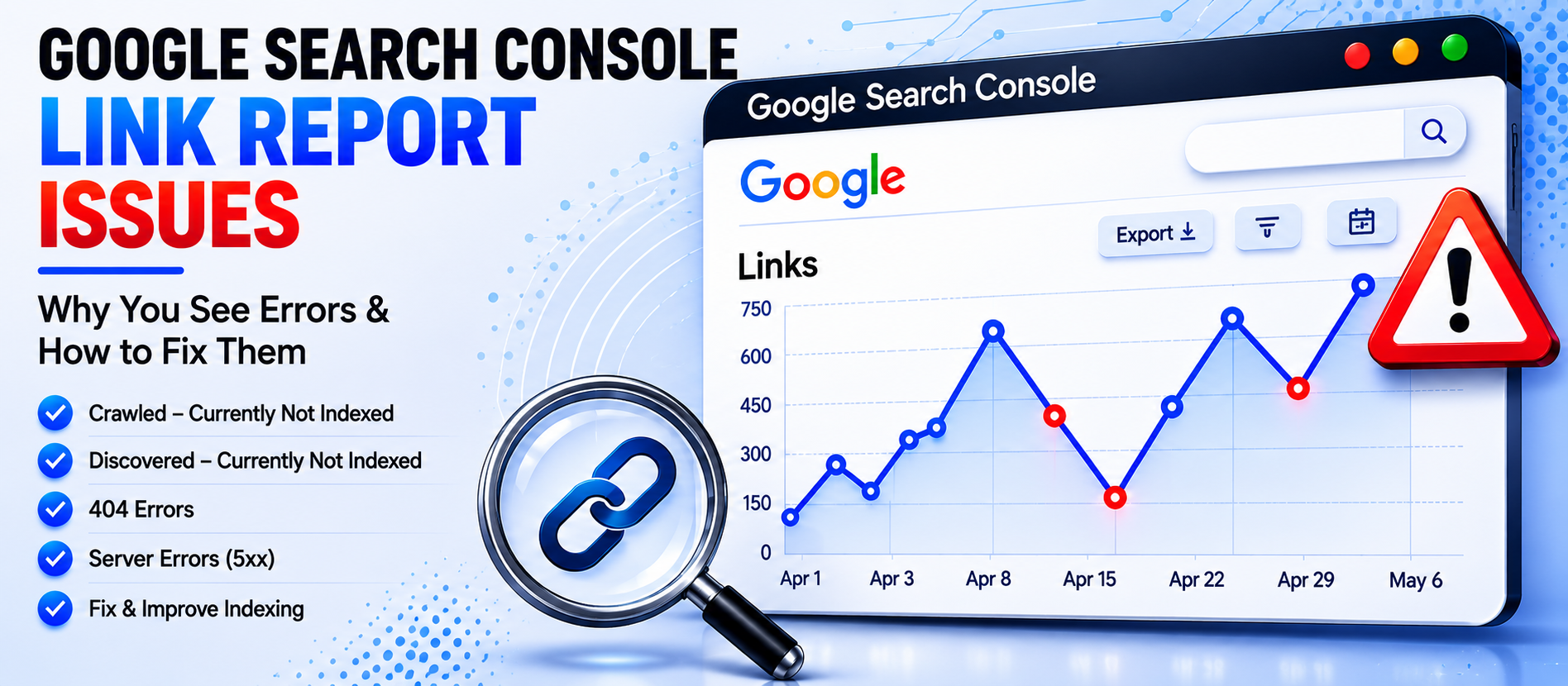
Google Search Console is one of the most trusted tools for SEO professionals, marketers, and website owners. From tracking search performance to monitoring backlinks, it plays a major role in modern digital marketing strategies.
However, many users recently noticed something unusual inside the Google Search Console Links Report:
- Backlink counts suddenly dropped
- External links disappeared
- Internal links showed zero
- Old link data appeared instead of updated information
For many businesses, this created immediate panic.
At Designfo, we analyzed the issue carefully and found that this behavior is usually connected to reporting delays, temporary bugs, indexing refreshes, or changes in how Google processes backlink data — not necessarily a real loss of backlinks.
What Is the Google Search Console Links Report?
The Links Report inside Google Search Console helps website owners understand:
- Which websites link to their pages
- Which pages receive the most backlinks
- Internal linking structure
- Anchor text distribution
- Top linking domains
This report became an important tool for:
- SEO agencies
- Bloggers
- eCommerce brands
- Digital marketers
- Technical SEO professionals
But many users misunderstand one important detail:
Google Search Console never shows a complete list of all backlinks.
Instead, it provides a sampled and processed version of backlink data.
Why Google Search Console Sometimes Shows Old Data
There are several technical reasons why the Links Report may appear outdated or inaccurate.
1. Google Uses Processed Link Data, Not Real-Time Data
Unlike analytics dashboards that update instantly, backlink reports are processed in batches.
Google’s systems:
- Crawl billions of pages
- Validate backlinks
- Remove spam signals
- Process canonical relationships
- Recalculate link importance
This takes time.
As a result:
- Link reports may lag behind reality
- Some backlinks temporarily disappear
- Counts may fluctuate unexpectedly
2. Reporting Bugs Can Temporarily Break Link Counts
Google occasionally experiences reporting glitches inside Search Console.
Several recent cases showed:
- External links dropping to zero
- Internal links disappearing
- Massive declines in reported backlinks
Even though:
- Rankings remained stable
- Traffic did not drop
- Backlinks still existed externally
This strongly indicates that the reporting layer broke — not the actual backlinks.
3. Google Samples Link Data Instead of Showing Everything
Many people assume Google Search Console displays every backlink Google knows about.
That is not true.
Google intentionally:
- Samples data
- Filters links
- Prioritizes significant backlinks
- Removes duplicates
- Ignores low-quality signals
This means:
- Link counts naturally fluctuate
- Some backlinks appear later
- Others disappear temporarily
4. Core Updates Can Coincide With Reporting Delays
Sometimes reporting issues appear during:
- Core algorithm updates
- Infrastructure refreshes
- Search indexing recalculations
While core updates do not directly remove backlinks, they may trigger:
- Data processing delays
- Reporting recalibrations
- Temporary interface inconsistencies
What Website Owners Should Not Do
When backlink numbers suddenly drop inside Search Console, many businesses panic and make poor SEO decisions.
At Designfo, we strongly recommend avoiding these mistakes:
Do NOT:
- Remove existing backlinks
- Start disavowing links unnecessarily
- Buy panic backlinks
- Assume Google penalized your website
- Delete content
- Change your SEO strategy immediately
A reporting issue does not automatically mean your authority disappeared.
How to Verify Whether Your Backlinks Still Exist
Instead of relying on one report, verify backlinks through multiple sources.
Check:
- Google Search results
- Ahrefs
- Semrush
- Bing Webmaster Tools
- Manual backlink indexing
- Referral traffic
- Search rankings
This is why professional SEO strategies should never depend on a single reporting tool.
Why Backlinks Still Matter in Modern Seo
Despite AI search evolution, backlinks remain important because they:
- Build authority
- Improve discoverability
- Strengthen trust signals
- Help semantic relevance
- Support indexing
However, modern SEO is shifting from:
- Quantity-based link building
- Contextual authority
- Entity relationships
- Brand trust
- Topical relevance
At Designfo, we focus on:
- High-quality editorial backlinks
- AI-search optimization
- Entity-based SEO
- Structured content architecture
- Machine-readable authority signals
Understanding the Difference Between Real Link Loss Vs Reporting Problems
📋 Quick Summary
- Traffic decline
- Lost referring domains
- Deindexed pages
- Manual actions
- Random fluctuations
- Stable rankings
- Stable traffic
- Recovery after a few days
- Real Link Loss Usually Includes:
- Traffic decline
- Lost referring domains
- Deindexed pages
- Manual actions
- Reporting Glitches Usually Include:
- Random fluctuations
- Stable rankings
- Stable traffic
- Recovery after a few days
Understanding this difference is critical before taking action.
How Designfo Recommends Monitoring Seo Health
Instead of obsessing over single metrics, businesses should track:
More Reliable SEO Indicators:
- Organic traffic growth
- Keyword visibility
- Search impressions
- Click-through rate
- Indexed pages
- Brand mentions
- Referral traffic quality
- Conversion performance
Backlink reports are useful — but they are only one part of a much larger SEO ecosystem.
The Future of Link Reporting in Ai Search
As AI-driven search evolves, traditional backlink reporting may become less transparent.
Search engines increasingly rely on:
- Entity recognition
- Contextual relationships
- Brand authority
- User engagement
- Semantic trust signals
This means future SEO success will depend less on raw backlink counts and more on:
- Content quality
- Digital authority
- Structured knowledge
- AI readability
- Topical expertise
Final Thoughts
Google Search Console reporting fluctuations can look alarming, but they rarely indicate an immediate SEO disaster.
Most temporary drops in link counts are connected to:
- Reporting bugs
- Data refreshes
- Processing delays
- Sampling changes
- Infrastructure updates
At Designfo, we recommend focusing on long-term SEO fundamentals instead of reacting emotionally to temporary dashboard changes.
A healthy SEO strategy should always prioritize:
- High-quality content
- Strong technical SEO
- Real authority building
- AI-friendly website architecture
- Consistent user value
Because in modern SEO, trust and relevance matter far more than temporary reporting fluctuations.